Plastic waste moves up the value chain
Novel processes are showing that treating plastic waste only as a disposal problem may become a thing of the past. Its carbon-rich composition can serve as a useful raw material for producing products that people require and use every day, according to Angelica Buan in this article.
Life’s essentials – from food and medicine to lifestyle products and fuel – can now be derived, believe it or not, from waste plastics used as feedstock in advanced technologies. Plastic waste has traditionally been recycled into new plastic products, but researchers and companies are finding ways to give it a much wider purpose.
Waste plastics are being converted into food ingredients and packaging, chemical building blocks for medicines, hydrogen and other fuels, as well as materials for consumer products. As these technologies develop, they could open more practical routes for recovering value from plastic waste that is difficult to recycle through conventional methods.
Sustainable materials for major applications
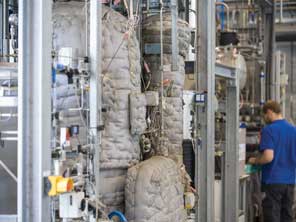
Netherlands-based circular chemistry company BioBTX, backed by German polymers producer Covestro as a shareholder since 2024, is building its first commercial-scale plant to convert mixed plastic waste into aromatic chemicals.
Located at Chemical Park Delfzijl, the plant will use BioBTX’s proprietary Integrated Catalytic Cracking Process (ICCP) to process about 20,000 tonnes/year of waste. Through catalytic pyrolysis, the waste will be converted into about 10,000 tonnes of aromatic oil containing benzene, toluene and xylenes, along with 8,000 tonnes of sustainable by-products each year.
These aromatic chemicals are widely used as building blocks for coatings, pharmaceuticals and performance materials, while Covestro can use them to produce isocyanates such as MDI and TDI for soft foam in mattresses and rigid foam used to insulate refrigerators.
The project marks the commercial stage of a 14-year development that began in 2012 and progressed through laboratory and pilot-scale testing. Unlike recycling systems that require a single sorted plastic stream, ICCP can process mixed plastic waste, while its feedstock flexibility could allow the technology to process other materials such as biomass in the future.
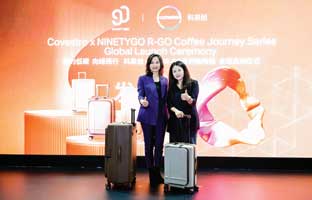
On the other hand, innovation demonstrates that travelling and waste plastic can go hand in hand. As such, Covestro and Chinese luggage brand NinetyGo have launched the R-Go “Coffee Journey” suitcase series, featuring shells made with 90% post-consumer recycled PC content, Makrolon R90, which is sourced from end-of-life 19-l water barrels. Covestro and its partners have been recycling 1 million barrels/year since 2020.
A 20-inch suitcase from the new series has a shell carbon footprint more than 67% lower than its previous version because of its higher recycled content. The material retains impact resistance at room temperature and temperatures as low as -20°C, while offering flexibility in colour and finish.
NinetyGo first partnered with Covestro in 2021 on a limited-edition PCR PC suitcase, and the latest series extends that work into a global product launch.
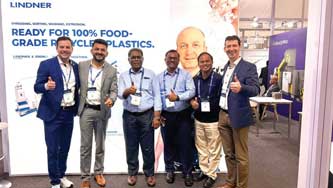
In India, plastics recycler Srichakra Polyplast has installed two washing lines from Germany-headquartered recycling machine maker Lindner Washtech for post-consumer recycled film and rigid plastic waste.
The systems will produce recycled materials building on Srichakra Polyplast’s existing operations as the operator of India’s first food-grade rPET facility and a major producer of food-grade rPET and rHDPE.
The company collects post-consumer packaging waste and processes it into recycled materials for beverage and fast-moving consumer goods brands, and is expected increase the supply of recycled plastics in India and strengthen the production of recycled materials for sustainable packaging and other applications.
(PRA)SUBSCRIBE to Get the Latest Updates from PRA Click Here»