Green news: CovationBio’s biobased THF/PTMEG to be used in footwear; EMV buys idled recycling plant in Netherlands

In China, biobased materials firm Covation Biomaterials says it has successfully produced its first series of commercial, on-spec batches of biobased tetrahydrofuran and polytetramethylene ether glycol, which are sold under the trade names Xatryx.T bioTHF and Xatryx bioPTMEG, respectively.
The 50,000 tonnes/year plant at Qidong was completed in April 2026.
In August 2026, the Qidong plant officially initiated the production of its first commercial batches, including Xatryx.T bioTHF as well as Xatryx bioPTMEG series products in molecular weights of 2000, 1800, and 1000. The company says, “Under rigorous internal quality control testing, all produced grades adhere to industry expected quality specifications.”
CovationBio also announced a partnership with insole brand Insite, which unveiled the world’s first athletic insole featuring Xatryx bioPTMEG at the recent NW Materials Show in Portland, Oregon. This marks a successful application development milestone, showcasing Xatryx bioPTMEG's application from a raw material to a bio‑based footwear building block.
“We are actively collaborating with downstream customers for trial sampling and collecting feedback, which will further validate the performance of our products in end‑use applications and their drop-in adaptability to existing application processes,” You Feifeng, Chairman of CovationBio, said.
As a sustainable alternative to fossil‑based PTMEG, Xatryx bioPTMEG can directly replace fossil‑based PTMEG, delivering product performance in downstream applications such as spandex, polyurethanes, and thermoplastic elastomers.
In other news, EMV Capital plc, the London-based VC investment group, has acquired an industrial-scale chemical recycling plant for plastic waste in the Port of Rotterdam through its newly formed wholly owned subsidiary, Winalot BV.
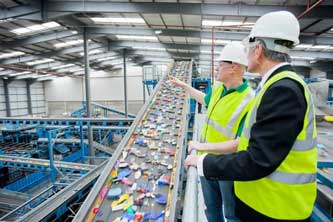
The Pryme One plant achieved mechanical completion in 2023 following development capital expenditure estimated at more than EUR50 million. It commenced operations in 2024 and generated revenues from the sale of pyrolysis oil, before operations ceased in March 2026 following issues with its existing reactor technology.
EMV Capital and DeepTech Recycling Limited (DTR), an existing EMV Capital portfolio company specialising in the chemical recycling of plastic waste, identified an opportunity to retrofit DTR’s already-manufactured proprietary fluidised bed reactor into the existing ‘balance of plant’ facility, with the aim of returning it to commercial operation.
Approximately £6 million of further capital expenditure is estimated to be required, with commercial operations potentially recommencing within approximately 18 months, subject to securing the required funding, agreeing definitive commercial terms with DTR and successful completion of the proposed retrofit programme.
Winalot and DTR intend to negotiate commercial terms for the sale and installation of the reactor and related support services. If agreed, the project would provide DTR with its first full-scale commercial customer and the potential to establish a demonstration and reference site for its technology.
This represents a new venture build project for EMV Capital, bringing together an existing industrial asset, technology developed within its portfolio, specialist expertise and third-party capital. EMV Capital holds a c.18% direct equity interest in DTR, together with a further c.31% of assets under management on behalf of third-party investors.
Upon a successful restart, the plant is expected to generate revenue and operating profit from the production and sale of recycled oil products for use as feedstock by the petrochemicals industry.
The plant is located within Plant One Rotterdam in the Botlek area of the Port of Rotterdam, alongside several of Europe’s largest refineries and major chemicals producers, providing access to an established market for its recycled oil products and proximity to potential feedstock suppliers.
The location also provides access to the Port of Rotterdam’s extensive infrastructure, alongside a shared environmental permit, utilities, trained operators and site services. The site can support future expansion in capacity, providing a route to scale production as the project develops.
The project has also received strong support from local development institutions, reflecting its potential contribution to Rotterdam’s established chemicals and circular-economy ecosystem.
(PRA)SUBSCRIBE to Get the Latest Updates from PRA Click Here»