Expansions: Lanxess/Wuxi South explore cooperation in lubricant additives; BASF evaluates MDI expansion in India
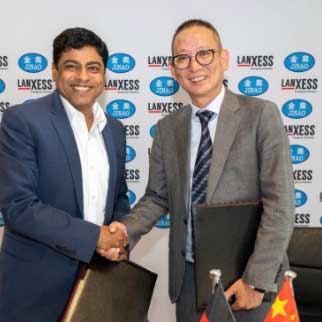
German specialty chemicals company Lanxess and China’s Wuxi South Petroleum Additive recently signed a Memorandum of Understanding (MoU) to explore strategic cooperation aimed at strengthening supply chain resilience, regional manufacturing capabilities and customer support across China and the Asia-Pacific region.
The agreement was signed at Lanxess headquarters in Cologne, Germany, by representatives of both companies. The cooperation reflects both companies’ interest in strengthening supply capabilities and supporting customers across the Asia-Pacific region. The parties intend to evaluate opportunities for collaboration in selected lubricant additive value chains, combining Lanxess’s formulation expertise and market access with Wuxi South’s manufacturing and regional supply capabilities.
Wuxi South views the agreement as a framework for further cooperation with Lanxess in lubricant additives and related value chains.
“We are pleased to enter this cooperation framework with Lanxess,” said Ruxing Miao, General Manager of Wuxi South. “The MoU provides a basis to explore areas where both companies can contribute their respective strengths and create value for customers throughout the region.”
The MoU establishes a framework for further discussions regarding technical, commercial and supply-chain cooperation.
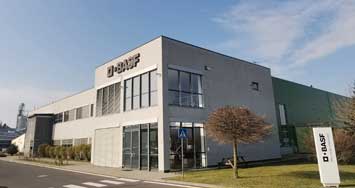
Meanwhile, compatriot German firm BASF says it is evaluating a potential investment in India as part of its continued commitment to serving growing customer demand in the region. The company is in the advanced stages of a feasibility study for the construction of an MDI (methylene diphenyl diisocyanate) production complex and has secured an industrial land parcel in Dahej, Gujarat, for the potential investment through its Indian subsidiary, BASF India Polyurethanes Private Limited.
MDI is a key building block for polyurethane products used in applications ranging from building insulation and refrigeration to automotive components, furniture and consumer goods.
“India is among the most attractive growth markets globally, with strong demand expected across a wide range of industries,” said Dr. Stephan Kothrade, member of the Board of Executive Directors and Chief Technology Officer of BASF SE. “In line with our ‘Winning Ways’ strategy, we are focusing on investments that strengthen our core businesses and create long-term value. A potential investment in India would further expand our manufacturing footprint in a key growth market and, consistent with our local-for-local approach, enable us to serve customers in India and neighboring markets with locally produced MDI.”
The final investment decision will be based on the outcome of the feasibility study and will remain subject to all necessary approvals.
“BASF continues to invest in its global MDI production network to support customer growth and ensure reliable supply across key markets,” said Dr. Ramkumar Dhruva, President of BASF’s Monomers division. “While the commissioning of our US$1 billion MDI expansion project in Geismar is entering its final phase, we are evaluating the next potential step in strengthening our global MDI footprint. A project in India would complement our existing production network and further enhance supply reliability for our customers.”
In addition to Geismar, US, BASF operates MDI production facilities in Antwerp, Belgium; Chongqing and Caojing (Shanghai), China; and Yeosu, South Korea.
India has been part of BASF’s growth story for more than 130 years. Today, the company operates multiple production sites across the country, serving customers in a broad range of industries. At its integrated chemical complex in Dahej, BASF India Limited already operates an MDI splitter and polyurethane production facilities, making the location a strong foundation for further growth. As India’s urbanization, infrastructure development and manufacturing activities continue to accelerate, demand for high-performance materials is expected to grow.
(PRA)SUBSCRIBE to Get the Latest Updates from PRA Click Here»