Chemical recycling not economical: JRC report
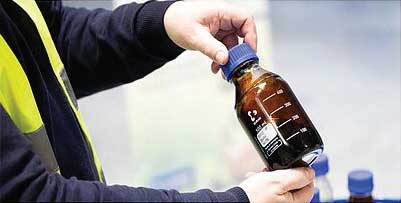
According to a report by the European Commission’s Joint Research Centre (JRC) that was published recently, chemical recycling is said to be more expensive than both virgin plastic production and mechanical recycling.
The report titled "Economic viability of chemical recycling" delved into the economic conditions of pyrolysis and solvolysis recycling processes for plastic waste. The report found that production costs for recycled outputs made with these technologies were at least 1.5 times and typically 2-3 times higher than for the corresponding virgin plastics. The cost of chemically recycled plastics was not competitive compared to recyclate from mechanical processes, either.
Solvolysis is the process of converting plastic polymers into monomers or oligomers using solvents at relatively mild reaction temperatures (80-300°C). It is typically suited for polymers like polyurethane (PU), PET, PA and PC.
Pyrolysis involves the thermal conversion of polymers into smaller molecules at higher temperatures (300- 700°C) in the absence of oxygen; products are mainly gas, oil, and solid residue. It is typically suited for PE, PP, PS and PMMA. Gasification is the conversion of polymers into a gas at very high temperatures (700–1200°C) with a limited amount of oxygen; the gas generated is also called syngas and can be used for energy production or as a raw material for further processing into polymers, chemicals, or fuels.
Currently in the EU, 80% of the chemical recycling capacity is based on pyrolysis and 20% on solvolysis, following the relative market shares of the polymers that the respective technologies can address.
For pyrolysis, the report estimates that the resulting recycled polymers cost approximately 1.4 to 3.7 times more than virgin polymers. The recycling yields with this technology are low – typically 30–50% relative to the plastic waste input. According to the authors, these relatively low material yields, feedstock preparation requirements, and high energy demand are key contributors to the higher costs.
With solvolysis, recycling yields of above 90% are possible. However, in the case of PET, those recycled via solvolysis still remain more expensive than food grade virgin PET or mechanically recycled PET.
The report said that while chemical recycling has positive complementary role in the recovery of plastics, mechanical recycling is much more economical and efficient in the use of resources and has a much lower carbon footprint.
Despite the higher costs, the authors conclude that chemical recycling in the future may still play a role in supplying recycled-content plastics required under the EU Single-Use Plastics Directive (SUPD, Directive (EU) 2019/904) and Packaging and Packaging Waste Regulation (PPWR, Regulation (EU) 2025/40).
The authors estimate that the PPWR alone could contribute to demand for between 500,000-1 million tonnes/year of chemically recycled plastics suitable for food packaging and other contact-sensitive applications.
However, this does not automatically guarantee a sales market for chemically recycled material regardless of the price, the authors note. In particular in light of the high cost mark-ups, companies obliged to meet the EU targets could look for other, less expensive ways of achieving compliance, the report added.
(PRA)SUBSCRIBE to Get the Latest Updates from PRA Click Here»