Green news: Avantium produces first FDCA at Netherlands plant; ReBioCycle demonstrates closed-loop PLA recycling
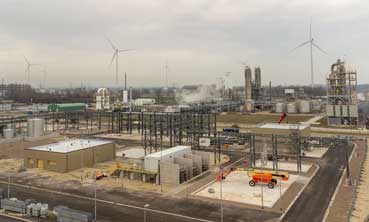
Dutch materials firm Avantium says that it has successfully produced the first batch of furandicarboxylic acid (FDCA) at its FDCA flagship plant in Delfzijl, Netherlands, said to be the world's first commercial-scale plant for the production of FDCA.
The production of the first batch of FDCA marks a major start-up milestone for the FDCA plant and follows the successful commissioning of all major process units. It paves the way for ramping up toward commercial sales, anticipated to start at the end of 2026.
FDCA is the core monomer of polyethylene furanoate (PEF), which is a fully bio-based, recyclable new polymer, and Avantium promotes this material under the market brand "releaf".
The production of the first FDCA batches represents an important step in validating Avantium's proprietary FDCA technology under commercial operating conditions. Avantium will now focus on a disciplined product qualification and operating program, to ensure its product meets customer specifications, progressing from batch toward continuous operations.
A successful start-up and qualification process is expected to provide commercial-scale validation of Avantium's YXY technology for the production of FDCA and PEF and support the advancement of licensing discussions with prospective partners worldwide
The company plans to launch commercial sales of FDCA by the end of 2026. From the start of operation, it is expected to take 12 to 24 months to gradually ramp up to the full designed production capacity.
In other news, the EU-funded ReBioCycle project has demonstrated a complete recycling pathway for polylactic acid (PLA) from mixed plastic waste at pilot scale. According to project partner TotalEnergies Corbion, PLA was separated from mixed waste streams using existing sorting technologies, chemically broken down into lactic acid and subsequently repolymerised into PLA. The recycled material reportedly achieved properties comparable to those of virgin material.
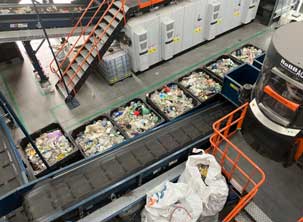
The trials were conducted in an operational environment. After the PLA had been sorted to a level of purity sufficient for further processing, Torwash used its hydrolysis technology to convert the recovered PLA into lactic acid.
TotalEnergies Corbion then used the lactic acid to produce recycled PLA. The process chain therefore covers every step from mixed waste collection to the production of a new polymer.
The result demonstrates the technology's feasibility beyond controlled laboratory conditions. However, industrial implementation has not yet been achieved. The consortium now plans to develop and validate applications using the recycled PLA and to scale the process toward industrial capacity. No information on throughput, yield, energy consumption or economic viability was published.
Of particular relevance to the plastics and packaging industry is the potential integration of PLA into existing sorting and recycling infrastructure. The project is also linked to the requirements of the EU Packaging and Packaging Waste Regulation (PPWR), under which packaging must be recyclable from 2030.
TotalEnergies Corbion is a joint venture between TotalEnergies and Corbion. The company develops and manufactures PLA bioplastics under the Luminy brand for applications including packaging, fibers, consumer goods, medical components and 3D-printing filaments.
(PRA)SUBSCRIBE to Get the Latest Updates from PRA Click Here»