Green news: Loop to set up PET recycling plant in Gujarat; Syntetica/Michelin advance nylon recycling in France
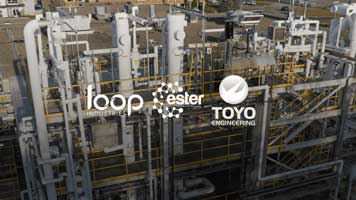
Canadian textile-to-textile polyester recycler Loop Industries has announced that its joint venture, Ester Loop Infinite Technologies Private Limited (ELITe), has signed a MoU with the state government of Gujarat, India, to support the development of Loop's India manufacturing platform.
The agreement is expected to facilitate permitting, infrastructure coordination, and administrative processes for the project, which represents Loop's first large-scale commercial deployment.
The proposed facility will be located at PCPIR Dahej region Bharuch Gujarat and is expected to generate employment for around 500 people, with operations targeted to commence by 2028. The facility will deploy Infinite Loop technology to recycle polyester waste into virgin-quality PET, enabling circular solutions for global textile and packaging applications.
The Dahej facility is designed to produce 70,000 tonnes of recycled dimethyl terephthalate (rDMT), 23,000 tonnes of recycled monoethylene glycol (rMEG), and 70,000 of recycled PET (rPET) resin annually. There is a provision to further expand the capacity within the same location by another 100,000 tonnes/year of rPET resin.
Based on current engineering assumptions and foreign exchange rates, the estimated capital cost for the initial India facility is currently expected to be approximately US$165-170 million, compared to prior estimates of approximately US$190 million.
In December last year, ELITe had announced the award of the detailed engineering contract for the facility to Toyo Engineering India Pvt. Ltd. It had followed the successful completion of front-end engineering design (FEED) by Tata Consulting Engineers, and represented the final engineering phase ahead of construction.
Separately, Nike Inc. had been confirmed as the facility’s anchor customer under a multi-year offtake agreement for Twist - a material that enables global apparel and textile companies to meet their sustainability commitments through certified, traceable circular polyester.
"This agreement will assist us as we move from planning toward execution," said Daniel Solomita, Loop's CEO. "With government alignment and expansion capacity already secured, we are building a scalable commercial platform positioned to support growing global demand for virgin-quality recycled polyester. And the reduced capital cost will improve our return on investment."
In other news, Syntetica, a French chemical recycler start-up, and the Centre for Sustainable Materials (CMD) at French tyre maker Michelin’s Innovation Park – Cataroux in Clermont-Ferrand, are joining forces to accelerate the industrial development of a breakthrough nylon recycling solution.
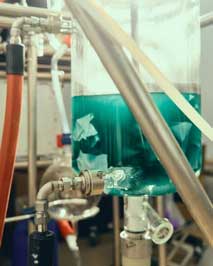
This collaboration will enable, for the first time, the industrial-scale recycling of nylon-rich mixed textiles. The pilot installation will benefit from the industrial infrastructure and technical teams made available by the Michelin Innovation Park, transforming a laboratory innovation into a reproducible industrial solution.
The global textile industry faces a major environmental challenge: today, less than 1% of textiles are recycled. The majority of technical garments contain mixed synthetic fibres, making recycling complex, or even impossible, using conventional methods.
Syntetica has developed a proprietary, low-temperature chemical process capable of recycling nylon-rich mixed textiles directly, without pre sorting, to produce Nylon 6 and Nylon 6,6 of high purity, compatible with textile, automotive, and industrial applications.
The pilot at the CMD targets the recycling of several tonnes of textile waste from the initial phase, with a progressive scale-up towards industrial volumes for the future demonstrator facility from 2027.
This collaboration rests on a shared conviction: industrial players have a key role to play in the transition towards a more sustainable world. It is set within a structuring European regulatory context, marked by the mandatory separate collection of textiles from 2025 and by growing requirements for recycled content from 2027.
The pilot installation at the Centre for Sustainable Materials marks the first step in a broader ambition carried by Syntetica’s green chemistry platform, designed to extend to other polymers and open the way to a new generation of circular industrial solutions.
Operated and managed by Michelin, the CMD is designed to accelerate the scale-up of the start-ups it hosts in the fields of cleantech and green energy.
(PRA)SUBSCRIBE to Get the Latest Updates from PRA Click Here»