Green news: TotalEnergies starts up France’s first advanced recycling plant; Aduro signs MOU to advance HCT technology
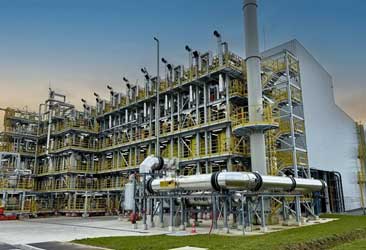
Energy firm TotalEnergies says it has launched France’s first advanced plastics recycling plant, with an annual capacity of 15,000 tonnes, at its Grandpuits site southeast of Paris. This start-up marks another step in the conversion of the refinery into a zero-crude platform.
The plant uses recycling technology supplied by its partner Plastic Energy. It transforms hard-to-recycle plastic waste from French households, which is currently sent to landfill or incineration, into a synthetic oil through a pyrolysis process, involving heating the waste to high temperatures in an oxygen-free environment and under pressure. This advanced recycling process makes it possible to recycle waste that cannot be recycled mechanically.
The synthetic oil is then treated as petrochemical feedstock, as a substitute for fossil fuels. It contributes to producing recycled plastics of the same quality as virgin plastics, compatible with the strictest requirements for food contact and medical applications. TotalEnergies signed an agreement with two French partners in 2023: Citeo and Paprec, to secure the plant’s long-term supply of plastic waste.
"The start-up of the first advanced plastics recycling plant in France is an important milestone in the conversion of our Grandpuits site into a zero-crude complex. Alongside Plastic Energy, contributing its technology, and our partners Citeo and Paprec, we are supporting the emergence of a brand-new French plastic recycling activity," declared Valérie Goff, Senior Vice President, Renewables, Fuels & Chemicals at TotalEnergies.
Meanwhile in other news, Aduro Clean Technologies Inc. has announced that its wholly owned subsidiary, Aduro Energy Inc., has signed an MOU with an EPC company (which it did not name) to jointly develop a commercial licensing package for Hydrochemolytic technology (HCT) to support deployment across multiple markets.
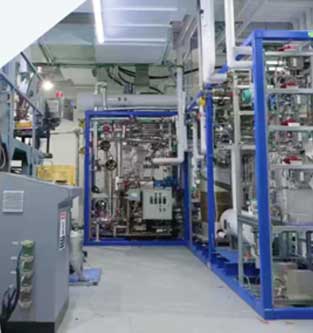
The MOU follows several months of technical and commercial discussions between Aduro and the EPC firm, including the sharing of preliminary technical information and evaluation of pathways to establish a commercial licence package.
The MOU establishes a framework and stage-gated activities to support the development of the technology and of a commercial licensing model for HCT. It also covers a pre-engineered plant concept that the EPC firm could use to design and build industrial plants for the chemical recycling of mixed and contaminated post-consumer plastic waste that is not suitable for mechanical recycling.
The MOU’s final objective is a jointly developed commercial HCT licence package and an associated licence driven business program for HCT based plastic recycling plants.
The current MOU activities and potential collaboration with eEPC are designed to fit within the HCT scale up pathway. This includes what it says is the first-of-a-kind industrial plant that is targeted to be realised at the Chemelot Industrial Park in the Netherlands. Data and operating experience from the current pilot plant and the planned industrial plant are expected to inform the engineering basis for the licence package.
The MOU is non-binding and does not create any obligation on either party to proceed with any particular transaction. Any work under the framework will be subject to mutually agreed scopes of work, and each step of the collaboration, including the development of the licence package and any licence business, will be subject to technical results, financing, completion of definitive agreements, and the approvals of the parties’ respective governance bodies.
(PRA)SUBSCRIBE to Get the Latest Updates from PRA Click Here»