Green news: Project Stop reaches 100 kt milestone of collected waste in Indonesia; Emirates Biotech joins the European Circle to produce food waste-based PLA
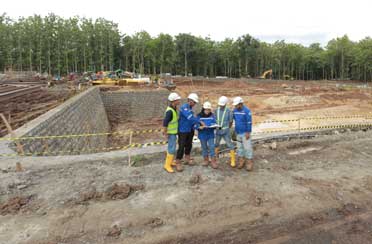
Project Stop, co-founded by polyolefins firm Borealis and Systemiq, together with scale-up partner Clean Rivers and in partnership with Banyuwangi Regency and with the vital support of the Indonesian government, has reached a significant milestone in advancing circular waste management in Southeast Asia.
In 2025, the program expanded access to affordable, end-to-end waste management services to 772,485 people – an increase of more than 200,000 compared to 2024 – across all Project Stop cities, with a strong focus on establishing Indonesia’s first regency-wide circular waste management system in Banyuwangi Regency, East Java.
Since 2017, waste management systems supported through Project Stop have collected 100,961 tonnes of waste – equivalent to nearly 200,000 local waste collection tricycle loads. This represents waste collected through these systems, most of which might otherwise have been openly dumped or burned. This milestone reflects the strength of long-term partnership and sustained community engagement. The program has also created 276 full-time-equivalent jobs, strengthening local economies and building capacity for lasting change.
In 2025, with the support of Banyuwangi Regency’s leadership, the program worked closely with village leaders, facilitators, and local influencers, leveraging community meetings and door-to-door outreach. These intensified behavior change efforts have improved household participation rates, which are still below the program’s ambition. Banyuwangi Regency’s efforts have been recognized nationally, ranking second in Indonesia for community-based total sanitation (STBM) and receiving the Swasti Saba Healthy District Award.
A highlight of the year was the transformation of recycled polypropylene from Project Stop’s collected plastic waste into Wild Pots, a new circular product showcased at the K2025 trade fair.
This collaboration between Borealis, Borouge, PT Pelita Mekar Semesta, Wildplastic, and machinery firm Wittmann demonstrates how innovation across the value chain can turn collected plastic waste into high-value products, the partners say.
Looking ahead, Project Stop expects 2026 to be a year of further growth and will continue to expand waste collection services to additional villages in Banyuwangi Regency, commission a second material recovery facility in Karetan, and begin construction of two material transfer stations.
Once operational, these facilities are expected to handle up to 260 tonnes/day of waste – a critical step toward enabling access to waste services across the Regency for up to 2 million people.
In other news, Emirates Biotech says it has joined the Circle consortium, a flagship initiative funded by the Circular Bio-based Europe Joint Undertaking (CBE JU) under the European Union’s Horizon Europe programme.
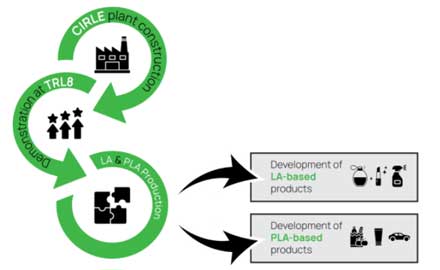
The four-year project has EUR27 million in funding and brings together 17 partners across the value chain. Its goal is to demonstrate a first-of-its-kind industrial biorefinery that converts organic food waste into high-value bio-based chemicals, including polylactic acid (PLA).
The consortium says it has already reached an important milestone; in September 2025, the world’s first lab-scale PLA made entirely from food waste was made. Emirates Biotech’s participation will help move this breakthrough toward industrial-scale production and commercial applications, aligning with the scheduled commissioning of the company's 80 kilotonnes PLA plant in 2028.
Within the project, Emirates Biotech will manage the polymerisation of lactic acid derived from food waste. The company will produce high-purity PLA, which will be supplied to other consortium partners for evaluation and application development.
The project also aims to produce different PLA grades for end-use markets such as automotive, cosmetics and food packaging. It will demonstrate how lactic acid and PLA can be produced from food waste within a waste management facility, helping reduce the overall carbon footprint of materials production.
“Proving that we can derive high-performance biopolymers directly from food waste is a major step forward for the industry,” said François de Bie, Chief Commercial Officer at Emirates Biotech. “Demand for sustainable materials is growing quickly in sectors like automotive and cosmetics. Our role in the Circle project is to convert polymer-grade lactic acid produced by our partners into commercial-grade PLA that meets those standards and can be used in existing manufacturing processes.”
The Circle project brings together partners across the full value chain, including waste management companies, chemical technology providers and global consumer brands. The consortium is coordinated by TripleW and includes partners such as Volkswagen, FrieslandCampina, Davines, Sulzer and Sulapac.
(PRA)SUBSCRIBE to Get the Latest Updates from PRA Click Here»