Plastic waste hacks transform crisis into circular opportunity
While sustainability innovations are able to combat climate change, plastic waste can emerge as an unsung hero, augmenting scarce essentials such as fuel, food, and medicine under force majeure conditions, says Angelica Buan.
Raise the topic of pollution, and plastics usually come to mind as agents of waste. But Covid-19 in 2020 and the ongoing Gulf crisis have flipped the narrative on plastics as an effective barrier material to prevent the spread of infections, in healthcare settings, or as packaging; or a material source for feedstock through recycling when supply has become limited.
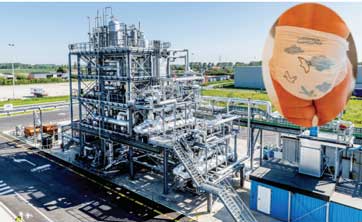
From nappies to pyrolysis fuel Disposable baby nappies are designed for convenience, but also encourage a “throwaway” habit. Diapers typically incorporate plastics such as PES, PE and PP, and according to a 2021 report from the United Nations Environment Programme (UNEP), are major contributors to global plastic waste. Every minute, over 300,000 diapers are discarded, incinerated, landfilled, ending up in the environment, citing a Euromonitor report.
Now, a collaboration between Belgium’s diaper brand Woosh, Austrian polyolefins company Borouge International and European pyrolysis company BlueAlp has made headway for circular diaper plastics. Recovered diaper plastics are chemically recycled into pyrolysis oil suitable for new polymer production, including diapers.
Woosh supplies recyclable diaper s to childcare facilities and households and collects them after use, creating a separate, traceable stream of used diapers for recycling. Together with Borouge and BlueAlp, Woosh defined quality requirements for recovered plastic as input to BlueAlp’s chemical recycling process, then optimised its mechanical separation to produce compliant plastic fractions.
The first industrial-scale recycling runs were carried out at BlueAlp’s plant in Oostende, Belgium. The recovered plastics were processed using BlueAlp’s pyrolysis technology, converting them into ISCC Plus-certified pyrolysis oil.
Woosh adds that it has over 30,000 children using the Woosh give-back system each day. Its diaper recycling plant, launched in 2025, processes thousands of tonnes of used diapers per year. It also plans to expand into France and the Netherlands.
Peter Voortmans, Vice President Marketing Consumer Products at Borealis, said that chemically recycling plastics from used diapers is complex and requires careful preprocessing to meet pyrolysis specifications. BlueAlp CEO Valentijn de Neve added that the collaboration addresses the challenge of difficult-to-recycle waste that can now be chemically recycled.
Microplastics into vinegar and vanilla
Microplastics and nanoplastics, which result when plastics break down through environmental weathering over time or are manufactured for use in certain product preparations, are widespread, with studies indicating that exposure occurs through air, through the application of products containing microplastics, and through the consumption of food grown or obtained from contaminated areas.
While the thought of consuming microplastics can be unsettling, the US Food and Drug Administration’s 2024 advisory states that the presence of environmentally derived microplastics and nanoplastics in food alone does not indicate a risk and does not violate FDA regulations unless it creates a health concern.
Given the volume of waste plastics, they are utilised to produce high-value products through the application of novel recycling technologies.
For example, a breakthrough sunlight-powered process of converting plastics into a pantry staple is not ending on a sour note. Researchers at the University of Waterloo have discovered a way to turn plastic waste into acetic acid, the main ingredient of vinegar, via photocatalysis, offering a promising alternative to plastic incineration.
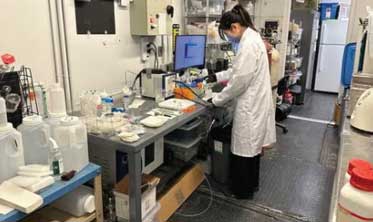
Dr Yimin Wu, Professor of mechanical and mechatronics engineering and the Tang Family Chair in New Energy Materials and Sustainability, shared that the study aims to convert microplastic waste into high-value products using bio-inspired cascade photocatalysis with iron atoms embedded in carbon nitride, modelled on how certain fungi break down organic matter using enzymes.
When exposed to sunlight, the material drives a series of chemical reactions that transform plastics into acetic acid with high selectivity. The reaction takes place in water, making it particularly relevant for addressing plastic pollution in aquatic environments. This method allows solar energy to break down plastic pollution without adding additional carbon dioxide to the atmosphere, according to Wu.
Published in Advanced Energy Materials, the study, led by Waterloo PhD student Wei Wei under Wu’s guidance and with early-stage support from a joint seed fund from the Waterloo Institute for Nanotechnology and the Water Institute, shows that acetic acid can be produced from common plastic wastes, including PVC, PP, PE, and PET, and remains effective across mixed plastic compositions.
The findings also point to new possibilities for addressing microplastics directly, as the process degrades plastics at the chemical level and could help prevent the accumulation of microplastics in water systems.
While still at the laboratory stage, the team suggests that this approach could be adapted for scalable, solar-driven recycling and environmental cleanup, and that the photocatalytic upcycling system can be further enhanced through strategic engineering of materials and manufacturing processes.
In a related development, scientists from the University of Edinburgh have discovered that the common bacterium E. coli can be used to convert post-consumer plastic into vanillin, a component of vanilla beans that is responsible for the taste and smell of vanilla.
Using laboratory-engineered E. coli in terephthalic acid, a molecule derived from degraded PET, the process transforms plastics into vanillin through a series of chemical reactions. The vanillin produced could be suitable for human consumption, although further experimental testing is required, said researchers.
Vanillin is widely used in the food and cosmetics industries, as well as in the formulation of herbicides, antifoaming agents, and cleaning products.
This biological system for upcycling plastic waste offers a way to reduce the environmental impact of plastic waste, according to Joanna Sadler, first author and BBSRC Discovery Fellow in the School of Biological Sciences.
Dr Stephen Wallace, Principal Investigator and UKRI Future Leaders Fellow, added that the study challenges the perception of plastic as merely problematic waste and instead demonstrates its potential as a carbon resource from which high-value products can be obtained. The study, funded by a BBSRC Discovery Fellowship and a UKRI Future Leaders Fellowship, was published in Green Chemistry.
(PRA)SUBSCRIBE to Get the Latest Updates from PRA Click Here»