Plants: Sibur tests proprietary metallocene catalyst for premium PE production; Celanese to close South Korean compounding plant, shift production to China/India

Russia’s Sibur has confirmed the efficiency and quality of its proprietary metallocene catalyst, a key component in the production of premium PE grades. The catalyst formulation and production technology were developed by scientists at the Sibur Innovations R&D centre, in partnership with the A.V. Topchiev Institute of Petrochemical Synthesis of the Russian Academy of Sciences (TIPS RAS).
As part of the project, a pilot-industrial batch of 750 kg of catalyst was produced. The samples successfully passed analytical and laboratory testing, confirming compliance with key parameters, including particle size distribution and elemental composition. Preliminary polymerisation tests demonstrated that the catalyst matches benchmark analogues in both efficiency and quality. The next stage will involve testing the catalyst at Kazanorgsintez industrial facilities.
Metallocene catalysts are used to produce metallocene PE, a modern class of polymers characterised by narrow molecular weight distribution and controlled chain structure. This type of PE offers improved strength, optical and barrier properties, and is widely used in flexible packaging, film production and high-tech applications.
Sergey Tutov, Director of Research and Innovation at SIBUR, commented: “Our goal is to fully meet our own catalyst demand — a key specialty component in polymer production — by 2030 through the development of our own capacities and partner network. At the same time, this is not only about technological independence, but also about flexible control over material properties, opening access to new product types, including those unique to the global market.”
In 2025, the Company began construction of Russia’s largest catalyst production facility in Tatarstan, which will operate based on proprietary technologies and joint developments with scientific partners. The first production line — for chromium catalysts — is scheduled to launch in 2027.
In other news, chemical firm Celanese Corp. says it is immediately ceasing manufacturing operations at its engineered materials compounding facility in Ulsan, South Korea, as part of a strategic network optimisation initiative designed to strengthen its Asian production footprint and enhance customer service capabilities.
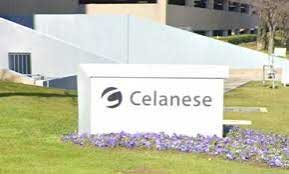
The company says it plans to transfer production volumes to three strategically located facilities: Nanjing and Shenzhen in China, and Silvassa in India. The move represents a critical step in the company's 'Grow & Fortify' strategy for its Engineered Materials business.
Celanese products such as PET, PA, PBT and HTN (high-temperature nylon) are said to be critical to driving industry and regional growth.
The broader Asia region represents opportunities for expansion, and Celanese is building manufacturing and compounding capabilities close to its customer base to better meet this growing demand, it adds.
Celanese says it has invested significantly in world-class compounding assets globally to ensure supply reliability and deliver engineered materials products with superior quality, performance, and reliability. The Nanjing, Shenzhen, and Silvassa facilities represent advanced manufacturing capabilities positioned to serve the broader Asia region's expansion opportunities.
(PRA)SUBSCRIBE to Get the Latest Updates from PRA Click Here»