Consortiums tie-up to reduce carbon footprint of plastics
In conjunction with ten partners, spanning seven countries, German chemicals firm Covestro has launched Bio4PURConti (Bio-Based Continuous Production for Sustainable Polyurethane Industry), acting as project coordinator of the pioneering EU-funded initiative. The project aims to develop the world's first continuous production process for bio-based aniline, which is a raw material for MDI (methylene diphenyl diisocyanate), a core building block for PUs.
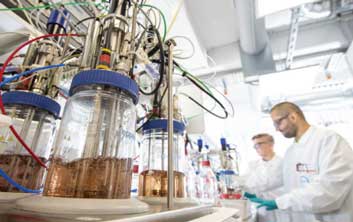
Fossil-based aniline production generates approximately 20 million tonnes/year of CO2 emissions worldwide. To reduce the carbon footprint of aniline production, Covestro uses a tailored microorganism in its bio-based process that converts industrial sugars from plant-based biomass into an intermediate product through fermentation. In a second step, chemical catalysis converts this intermediate into aniline with 100% plant-based carbon.
Bio4PURConti aims to take this a step further: instead of the fed-batch method used so far, in which raw materials are added and product harvested in stages, the project targets a continuous fermentation technology for the first time.
By using plant-based sugars, e.g. from hardwood biomass, it offers a renewable feedstock pathway, with the bio-based aniline a fully drop-in compatible with existing PU value chains.
The project scales from lab to 1.5 m³ semi-industrial demonstration at Bio Base Europe Pilot Plant (Ghent) and Covestro (Leverkusen), integrating cell recycling, real-time analytics and downstream processing. Key objectives include higher space-time yields and significant improvement in product carbon footprint.
The ten-partner consortium, spanning seven countries, brings together leading industrial and academic organisations: Covestro, Fibenol Imavere OÜ (Estonia), University of Stuttgart (Germany), Bio Base Europe Pilot Plant VZW (Belgium), Centre for Advisory Systems in Technology, Dortmund e.V. – ZEDO (Germany), Norwegian University of Science and Technology – NTNU (Norway), Axel'One (France), VTT Technical Research Centre of Finland Ltd (Finland), Cluster Industrial Biotechnology – CLIB (Germany), and Asociación Española de la Innovación en el Marketing y la Inversión Sostenible – AEIMIS (Spain).
The project has a total budget of EUR8.4 million, with EUR7 million in EU funding, and runs for 42 months.
InFACT unites partners to counter flexible packaging waste
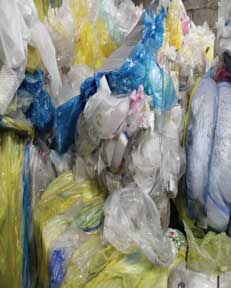
With less than 15% of flexible packaging being recycled, Nestlé, Arcus, Interzero, and 13 other companies are joining forces in a project known as InFACT to turn household plastic waste into new packaging.
The 16 international partners will cover the entire value chain: collection, sorting, recycling, packaging production, and food companies. The project is led by Danish Technological Institute and runs from 2026 to 2028, and is funded by Innovation Fund Denmark through the TRACE programme.
Modern flexible food packaging is technically advanced - typically built from multiple polymer layers, barrier films, printing inks, adhesives and, in some cases, metallised surfaces. This makes the material almost impossible to recycle through conventional mechanical remelting. InFACT combines several complementary recycling technologies to crack that challenge.
In addition, key barriers have been a fragmented value chain and the lack of viable business models. InFACT is designed to address this by connecting technologies, documentation and market demand across the full packaging chain.
The project launches at a pivotal moment. The EU Packaging and Packaging Waste Regulation (PPWR), which entered into force in February 2025, tightens requirements for recyclable packaging and documented recycled content by 2030. InFACT is designed to help industry translate these requirements into practical circular infrastructure.
InFACT Facts
- InFACT stands for Infrastructure for the Flexible plastic packaging Circular Transition
- Project period: 2026–2028
- Total budget: EUR3.2 million
- Funded by Innovation Fund Denmark via the TRACE program, a mission-driven research and innovation partnership focused on circular economy for plastics and textiles.
- Goal: Demonstrate circular infrastructure in which flexible plastic packaging is converted into new packaging
- Partners: Nestlé Danmark A/S, BKI foods A/S, Hilton Foods Denmark A/S, Cloetta AB, City of Copenhagen, Interzero GmbH,TotalEnergies, Fraunhofer IVV, ARCUS Greencycling Technologies, Re:Lab AB,Topsoe, Coveris GmbH, Dapofa A/S, University of Southern Denmark, VANA and DanishTechnological Institute
- PPWR: Regulation (EU) 2025/40, entered into force 11 February 2025
SUBSCRIBE to Get the Latest Updates from PRA Click Here»