Building Industry: Fail-proofing buildings with sustainable plastics
The causes of a building’s collapse may vary, but the quality of materials used from the foundation up can ensure the structural resilience of a building, says Angelica Buan.
"It may have been preventable," witnesses recounted, referring to the recent mishap involving a nine-storey building in an urbanised city north of Manila, Philippines, on a fateful day in May this year. According to reports, the building, still under construction at the time, suffered a catastrophic structural failure that resulted in numerous injuries and several fatalities.
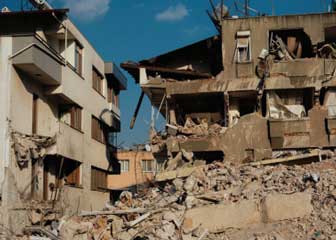
While the exact cause of the incident remains under investigation, factors such as material degradation, use of substandard construction materials, climatic stressors, and other potential contributors have yet to be ruled out. Meanwhile, this event is not isolated as globally, structural collapses do occur.
As high-intensity earthquakes also becoming increasingly prevalent, advancements in material technologies and updates to material standards continue to improve structural safety and resilience, while sustainable construction materials are also gaining traction.
Concrete solution to waste plastics
Used plastics need not go to waste as seen in the Philippines where the durability of plastics has been harnessed for the production of concrete, cement, and tiles.
Cement manufacturer Holcim Philippines has adopted a sustainability initiative and in 2023, reportedly converted more than 1 million tonnes of qualified waste into alternative fuels and raw materials for cement production, a 9% increase from 2022.
Holcim is among the pioneers of co-processing, a government-approved and globally recognised waste management technology that transforms qualified discarded materials into alternative low-carbon fuels and raw materials for cement manufacturing.
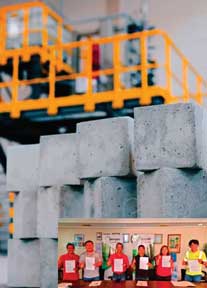
Geocycle, the company's waste management unit that provides large-scale recycling solutions, has established sustainability partnerships to co-process significant volumes of waste. In 2023 alone, it partnered with 50 city and municipal governments across the country, up from 35 the previous year, helping reduce the volume of waste sent to landfills.
In a similar move, the country’s Department of Public Works and Highways (DPWH) has pushed the use of recycled LDPE plastic bags mixed into asphalt cement to be used in the construction of national roads.
Under the agency’s policy, all regional offices, district engineering offices and unified project management office clusters can now utilise plastic bag waste in hot mix asphalt, which complies with the standards set by the Bureau of Research and Standards.
Another novel method of reusing waste materials for construction has been adopted in Marikina city, where the City Environment Management Office (CEMO) collects used cooking oil from its community and mixes it with discarded extruded polystyrene (XPS) foam to make decorative paving blocks for use in the city’s parks and playgrounds.
The initiative encourages the proper disposal of used oil and non-biodegradable materials such as XPS foam and prevents the contamination of water systems due to improper waste disposal.
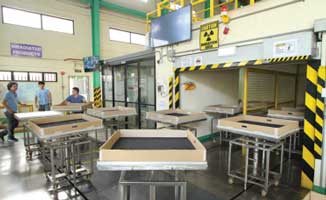
From traditional waste collection for recycling to the application of nuclear technologies such as radiation extrusion, plastic waste processing spans a wide range of methods for converting discarded packaging and containers into building materials.
The Philippine Nuclear Research Institute (PNRI) of the Department of Science and Technology (DOST) has introduced a project called post-radiation reactive extrusion of plastic wastes (PREx Plastic), which transforms these wastes to tiles and bricks.
In partnership with the Davao City-based Envirotech Waste Recycling Incorporated, PNRI has built a prototype house utilising PREx tiles and bricks for the walls, to demonstrate the strength and effectiveness of the radiation-processed plastics.
PNRI explained that the application of radiation, such as x-rays used in the medical field, modifies the molecular structure of polymers, improving their compatibility for practical use and enhancing the mechanical properties of recycled materials.
Apart from Envirotech, PNRI has also collaborated with its sister agency, the DOST–Industrial Technology Development Institute, to utilise radiation technology for upcycling plastic waste.
Circular paint from old tyres

A stack of old, worn-out tyres is a gold mine of resources, and this is proven by the collaboration between German chemical company BASF and French paint manufacturer Cromology, which utilised end-of-life tyres (ELTs) to produce wall paint.
Cromology’s circular Tollens interior wall paints utilise BASF’s acrylic styrene acrylate binder, Acronal Ccycled, which is produced using chemically recycled feedstocks derived from ELTs.
The technology partners convert ELTs into a secondary feedstock, pyrolysis oil, via pyrolysis technology, which is used in the new Tollens interior paint Maxiline+, available in France.
In the ChemCycling process, this oil is fed into BASF’s production, replacing fossil feedstocks. For a 10 litre container of the new Tollens paint, the amount of pyrolysis oil used is equivalent to approximately two ELTs. Using a third-party audited mass balance approach, the share of the recycled feedstock is attributed to selected products manufactured in the facility. The resulting binders are independently certified according to REDcert, a certification system for sustainable use of biomass, and have the same properties as conventionally produced products, BASF adds.
Meanwhile, BASF tied up for another collaboration between Dutch paints/coatings manufacturer AkzoNobel and French materials company Arkema to yield a more sustainable option for high-performance coatings.
AkzoNobel’s Interpon brand achieves up to a 40% lower carbon footprint through its ongoing value-chain partnership with Arkema and BASF, resulting in a superdurable Interpon D range, which helps reduce carbon emissions across a building’s life cycle.
Additional gains come from BASF’s bio-attributed raw materials, which have a product carbon footprint (PCF) of zero. BASF supplies neopentyl glycol (NPG) in a biomassbalanced version produced using renewable electricity (NPG ZeroPCF), and which Arkema uses to lower the carbon footprint of low and standard-temperature cure superdurable powder coating resins for AkzoNobel.
The colour collections and low-E architectural powder coatings produced by Interpon in Europe, all of which are superdurable, use reduced-emission, bio-attributed materials.
Arkema recently showcased at a US coatings event its high-performance and bio-based products for paints and wood coatings, featuring up to 93% bio-based content, reduced titanium dioxide (TiO2) usage, and recycledbased powder coatings for metal furniture with up to 40% recycled content, for more circular housing applications.
The company added 10 coating solution production sites to the list of ISCC Plus certified facilities in 2025, and says it has obtained certification for more than 70% of its coating facilities worldwide, including those dedicated to advanced liquid resins, waterborne resins, rheology and specialty additives, powder resins, UV/LED/EB technologies, and acrylic monomers.
(PRA)SUBSCRIBE to Get the Latest Updates from PRA Click Here»