Country Focus: Net zero industries for greener pastures in Thailand
The automotive and energy sectors, two of the economy’s most carbon-intensive segments, could spur Thailand’s transition to a green economy, says Angelica Buan.
The World Bank was not mincing its words in a recent Thailand Economic Monitor report. It stated that the country’s growth, long regarded as one of Southeast Asia’s stronger economic performers, is projected to slow to 1.6% in 2026, before recovering to 2.3% in 2027.
As Southeast Asia’s second-largest economy, Thailand’s competitiveness in recent years has withstood pressures from high energy costs, raw material shortages and intense foreign competition.
However, the country’s resilience has yielded positive results and exceeded the projection of 1.6%, with the economy expanding by 2.8% year-on-year in the first quarter of 2026, up from 2.5% in the fourth quarter of 2025, according to the Office of the National Economic and Social Development Council (NESDC).
Meanwhile, the country’s transition towards a carbon-neutral economy is underway, with the automotive and energy sectors being key drivers.
EVs headlining automotive spot
Thailand, often dubbed the "Detroit of Asia", has not lost its lustre in the automotive sector despite a slowdown in global vehicle demand in recent years, compounded by supply uncertainties stemming from the current Gulf crisis, which has put pressure on fuel and petroleum feedstock markets.
As well, as a signatory to the Paris Agreement, the country has pledged to reduce carbon emissions by up to 40% by 2030 and achieve net-zero emissions by 2050. As the global automotive industry pivots towards electric vehicles (EVs), Thailand is drawing on its established expertise in automotive parts, electrical/ electronic components, and chassis manufacturing to upgrade its production base.
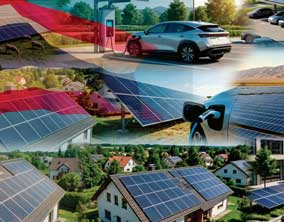
According to the World Bank's report, EV-related value chains account for 4.3% of Thailand's total exports, surpassing most of its ASEAN peers. More than 80% of the country's automotive parts industry is expected to remain relevant in the transition to EVs.
To accelerate EV adoption, Thailand aims for EVs to account for 50% of all new vehicle registrations by the end of the decade. Supporting that target, the government plans to facilitate the adoption of an additional 300,000 EVs through tax incentives and a vehicle trade-in scheme.
In a recent move to promote domestic adoption of EVs, the Thai government designated EVs as labelcontrolled products, requiring Thai-language labels that clearly disclose pricing, technical specifications, battery information and safety standards. The measure is intended to strengthen consumer protection by ensuring buyers receive accurate, complete and comparable information before making a purchase.
As part of its broader transition towards full-scale EV manufacturing, Thailand is considering restrictions on the sale of new petrol and diesel vehicles by 2035, according to the Thai Automotive Institute. The long-term objective is for all new vehicles sold in the country to be zero-emission models by that date.
Push for green mobility
Thailand’s EV industry is being lifted by government incentives, rising demand and investment from foreign automakers and original equipment manufacturers (OEMs).
Against this backdrop, the Board of Investment (BOI) has approved almost US$470 million in investments by Isuzu Motors (Thailand) Co. to modernise manufacturing operations and reinforce the country’s position as a key production hub. The projects include increased production-line automation, upgrades to meet Euro 6 emissions standards and the adoption of solar power at factories.
Isuzu plans to expand automation across chassis and body welding, painting and vehicle assembly, a move expected to improve quality while reducing production costs.
The Japanese automaker is Thailand’s secondlargest vehicle producer after Toyota, which operates through its subsidiary Toyota Motor Thailand Co. It manufactured nearly 172,000 vehicles in the country last year, with pickup trucks accounting for about threequarters of total output.
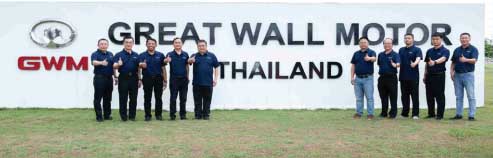
In a related development, Chinese automaker Great Wall Motor (GWM) has launched the ORA 5 production line at its facility in Rayong, capable of producing battery electric (BEV), hybrid (HEV) and internal combustion engine (ICE) vehicles on a single line. The plant has a maximum capacity of 80,000 units/year.
The ORA 5, launched in March, is designed to accommodate multiple drivetrain types for different customer segments. It has been positioned as a nextgeneration SUV offering improved energy efficiency, performance and safety, with BEV and HEV variants. The company is using the model to replace the discontinued ORA Good Cat line as it aims to increase output and shorten delivery times by supplementing local production with imports from China.
Momentum in Thailand’s electric mobility sector is also extending into commercial vehicles, with Chinese manufacturers scaling up product offerings and charging and infrastructure partnerships.
Chinese automaker BAIC Foton has launched its eView Connect new energy van in Thailand, equipped with CATL’s thirdgeneration liquid-cooled battery enabling a 2C charging rate. The model offers two battery options and is compatible with both AC and DC fast charging. It comes with an 8-year or 400,000 km battery warranty.
Separately, the company has signed an MOU with Spark EV, Thailand’s fast-growing charging network operator, to develop ultrafast charging infrastructure for medium and heavy-duty logistics vehicles, targeting nationwide 50-km coverage
The partnership also involves Huawei, Spark EV’s technology partner, whose liquid-cooled ultra-fast charging systems are already deployed across major Thai cities including Bangkok, Pattaya and Chiang Mai.
(PRA)SUBSCRIBE to Get the Latest Updates from PRA Click Here»