Recycling: Hera acquires Polish recycler to expand its footprint; DePoly inaugurates pilot plant in Switzerland
Aliplast (Hera Group) is further strengthening its leadership in recycling, thanks to the binding agreement signed by its Polish subsidiary Aliplast Polska to acquire 70% of Kronos Polymer Polska, a new company that will be formed by spin-off from Kronos Polymer, a Polish operator active in the recycling and processing of polyethylene (PE).
Kronos Polymer operates at a newly built industrial site located in Gniew (Pomerania, Poland), about 300 km from Aliplast Polska's branch in Tuszyn. The new company involved in the transaction will receive a plant equipped with a complete PE sorting, grinding and washing line, with an installed production capacity of 12,000 tonnes/year. This will allow Aliplast to progressively expand also in the local market, carrying out recycling and regeneration directly on site, thereby optimising flows and logistics.
Thanks to this transaction and other Italian projects currently underway – such as the rigid plastics recycling plant in Modena and the new PE-LD recycling plant in Borgolavezzaro (Novara) – the industrial synergies already existing within the Group will be further strengthened, and Aliplast will be able to increase its recycling flexibility, doubling its capacity to over 210,000 tonnes/year.
Aliplast is continuing the path that has characterised it in recent years: expansion of production capacity, including in foreign markets; an increasing focus on the quality and traceability of recycled material; and targeted expertise to provide a concrete response to the needs of the European market, also leveraging its already consolidated presence in countries such as France and Spain. These activities are even more strategic, especially at a time like the present, when the PPWR Regulation has introduced new European rules for the design, production and management of packaging waste, with the aim of reducing environmental impact and fostering the circular economy, making it essential to review the entire packaging supply chain, including from a structural point of view.
The acquisition of 70% of Kronos Polymer Polska by Aliplast Polska is subject to certain standard conditions precedent (including the completion of the demerger and the transfer of environmental permits), the fulfilment of which for the purposes of finalising the transaction is expected by the end of 2026.
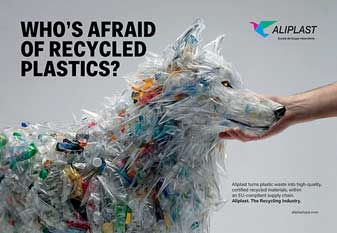
With plants in Italy, France, Spain and Poland, Aliplast has developed an integrated industrial model: from the collection of plastic waste to its transformation into secondary raw material, to the production of 100,000 tonnes/year of recycled products (including PET and LDPE flakes and granules, PET sheet, LDPE film, PP and HDPE flakes). Its communication campaign invite people to overcome their prejudices and view recycled plastics as a strategic resource, when managed within a secure, certified and compliant European supply chain
In other news, DePoly, a circular materials company based in Sion, Switzerland, which inaugurated its showcase plant in Monthey recently, says the PET depolymerisation facility is the first its kind and scale in the country, with a nominal capacity of around 500 tonnes/year of feedstock input with plans to commercialise it to 50,000 tonnes/year.
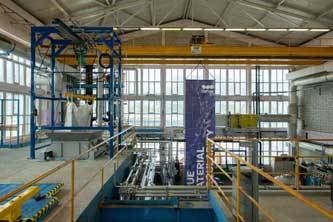
Unlike traditional recycling, which progressively degrades material quality with each cycle, DePoly says its technology breaks PET down into its original chemical components, enabling it to recreate virgin-quality raw materials with no loss of performance and suitable for all PET applications.
Founded in 2020 as an EPFL spin-off by Samantha Anderson, Chris Ireland and Bardiya Valizadeh, DePoly was born from the ambition to make plastics truly circular. Based in Sion with a team of around 30 employees, the company is taking a decisive step with the opening of its plant in Monthey.
To house this first industrial unit, DePoly chose to establish itself at the heart of Monthey’s Industrial Park (CIMO).
Beyond production, the plant will serve to optimise the process, qualify raw materials with industrial customers, and prepare for the deployment of DePoly's first commercial plant, which targets a capacity of 50,000 tonnes/year.
DePoly's process is based on light-activated chemical depolymerisation, capable of processing PET in under 60 minutes, without the need for high temperatures or added pressures. This approach recovers the material's original monomers, which can be directly reused in existing industrial processes with no loss of quality.
It handles a wide range of waste streams that are poorly served by conventional recycling today: food packaging, polyester textiles, complex films, coloured or contaminated materials. The recovered raw materials find applications across sectors as varied as packaging, textiles, automotive and electronics.
Beyond its environmental impact, DePoly says its technology addresses strategic industrial challenges. By transforming local waste into virgin-quality raw materials, the company helps secure access to essential resources, strengthens supply chain resilience and reduces dependence on fossil-based materials. It also opens new possibilities for sectors that are particularly hard to decarbonize, such as technical textiles, automotive and electronics.
The inauguration brought together a number of DePoly's investors, including its newest investor, Una Terra Venture Capital, alongside existing investors such as Infinity, Founderful, BASF, Beiersdorf, ACE & Company, MassMutualVentures and many more.
(PRA)SUBSCRIBE to Get the Latest Updates from PRA Click Here»