Green news: Vioneo moves biobased plant from Belgium to China; Zeopore/BioBTX report higher aromatics yield from waste plastics

Swiss biobased start-up Vioneo has announced it is relocating its first EUR1.5 billion methanol-to-polymers (MTP) plant to China instead of Europe. The planned 300,000-tonne/year plant will move from Antwerp, Belgium, to China.
The company, which aims to convert biobased methanol into PE and PP, said relocating its first plant to China allows it to tap into a commercial-scale biobased methanol supply in the country.
“Our overall mission remains unchanged: scale fossil-free plastics globally to meet growing customer demand,” Vioneo said in a statement. “Our leadership, our selected technology partners, product specifications and sustainability commitments all remain in place, and we will capitalise on the engineering progress already made,” it added.
It also added that the China site will use the same technology partners, product specifications and sustainability commitments as the proposed European project. Production is likely in 2029-30, with capacity unchanged at 200,000 tonnes/year of PP and 100,000 tonnes/year of PE, the company said.
Vioneo had previously planned to build its first commercial-scale unit at the Vopak Energy Park, Port of Antwerp.
It had said the plant would use green methanol sourced from agricultural and forestry residues that do not compete with food production. But it also noted at the time that Europe lacked sufficient feedstock and that supply might need to come from Asia. The China plant will also use agricultural and forestry residues as feedstock, the company has noted.
In other news, Dutch firms Zeopore Technologies and BioBTX have jointly reported a major advancement in the conversion of waste plastics and biomass into circular aromatics, achieving up to 100% yield increase in BTX (benzene, toluene, xylene) by combining BioBTX’s Integrated Cascading Catalytic Pyrolysis (ICCP) technology with Zeopore’s tailored mesoporous zeolite catalysts.
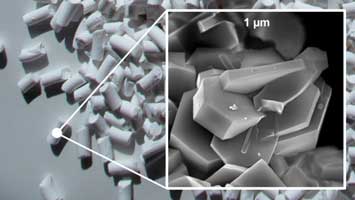
This collaboration brings together BioBTX’s expertise in process engineering with Zeopore’s mastery of zeolite catalyst design, unlocking synergies that significantly enhance conversion efficiency while reducing emissions.
Niels Schenk, Director of R&D of BioBTX: “Our ICCP process was already designed to maximize circularity and control contamination. By integrating Zeopore’s advanced catalysts, we’ve taken a major step forward in both performance and sustainability. It’s a clear demonstration of how catalyst innovation can accelerate the transition to renewable aromatics.”
The results show that Zeopore’s gallium-containing mesoporous ZSM-5 catalysts doubled the yield of BTX (benzene, toluene and xylene) aromatics in pilot-scale trials.
The improved porosity and metal distribution of the catalysts enhanced both dehydrogenation and cracking reactions, leading to higher selectivity and less unwanted gas formation.
In addition to boosting yields, the collaboration also achieved a nearly 50% reduction in CO2-equivalent emissions per unit of aromatics produced, a critical factor in making chemical recycling both economically and environmentally viable.
The companies say thework shows how catalyst accessibility and active site design can directly translate into process efficiency and lower emissions.
Following the success of this joint development, both companies plan to scale up the technology for commercial demonstration. BioBTX will integrate improved catalyst design into its first renewable aromatics plant, while Zeopore continues to expand its catalyst portfolio for waste plastics and biomass upgrading applications.
Kurt Du Mong, CEO of Zeopore said, “Zeopore and BioBTX share the ambition to accelerate the shift toward a carbon-circular chemical industry, enabling the reuse of end-of-life plastics and bio-based feedstocks as sustainable building blocks for fuels, materials, and chemicals.”
(PRA)SUBSCRIBE to Get the Latest Updates from PRA Click Here»