Expansions: AGC Vinythai commissions expanded chlor-alkali plant in Thailand; Zeon breaks ground on cyclo-olefin polymers plant in Japan
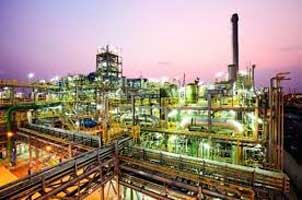
Thailand’s AGC Vinythai has commenced commercial operations following the planned capacity expansion at its chlor-alkali plant in Map Ta Phut. This project represents one of the largest deployments of Thyssenkrupp nucera’s e-BiTAC v7 technology (bipolar ion exchange membrane process electrolyser) for an efficient chlor-alkali electrolysis in a vinyl production chain.
The newly installed e-BiTAC v7 electrolyser has a production capacity of 220,000 tonnes/year of caustic soda. The chlorine produced at the expanded chlor-alkali plant will supply AGC Vinythai’s vinyl plant facilities, enabling an increase in PVC production capacity from 300,000 to 700,000 tonnes/year.
This expansion marks the largest investment in AGC Vinythai’s history and reinforces its position as Thailand's leading supplier of caustic soda and PVC.
This expansion enables the Thai company to meet the rapidly growing demand for caustic soda and PVC in Southeast Asia, further strengthening its position in the chlor-alkali business. These chemical products are essential inputs for key industrial and development sectors in Southeast Asia, including construction, packaging, automotive, pulp and paper, and textiles.
Thyssenkrupp nucera was commissioned to supply an e-BiTAC v7 electrolyzer in 2025. The scope of the project was subsequently expanded to include balance-of-plant services, such as basic engineering and other unit systems apart from the electrolyser.
In other news; Japan’s Zeon Corporation will begin construction of a new production plant for cyclo-olefin polymers (COP) at its business site in Yuka Town, Shunan City, Yamaguchi Prefecture.

The new plant will produce COP in anticipation of growing demand based on its expanding use in medical and semiconductor applications in addition to its optical applications. Full-scale construction will begin in March 2026 toward completion in the first half of fiscal 2028, increasing Zeon’s annual production capacity for COP by about 30% from current levels.
The company recently held a groundbreaking ceremony at the site,
President Toyoshima said: “Meeting the robust demand for COP has been a long-held dream, so it is deeply moving to begin construction in such an optimal location. We intend to further expand our operations in the Shunan area, including this plant, and continue to meet society's expectations by providing our proprietary materials.”
COP (product name: ZEONEX, ZEONOR) is a highly transparent plastic developed independently by Zeon, featuring diverse characteristics including advanced optical properties, low water absorption, and high purity. In addition to optical applications such as films and lenses, other uses are being rapidly developed, encompassing medical applications such as syringes and cell culture plates as well as semiconductor transfer containers.
For Zeon, COP is positioned as a growth driver that promises a steady increase.
The new plant is to become the second production base for COP after Zeon’s existing Mizushima Plant in Kurashiki City, Okayama Prefecture.
(PRA)SUBSCRIBE to Get the Latest Updates from PRA Click Here»