Recycling: SK Chemicals to set up plant in China in jv with Kelinle; Covestro/Allmed partner to pioneer recycling of artificial kidney filters

Recycling: SK Chemicals to set up plant in China in jv with Kelinle; Covestro/Allmed partner to pioneer recycling of
artificial kidney filters
South Korea’s SK Chemicals Co. is establishing a joint venture with a Chinese plastics recycling firm Kelinle to construct a waste plastics processing facility aimed at securing a stable supply of recycled plastics materials.
The joint venture with Kelinle will construct a Feedstock Innovation Centre (FIC) in Shaanxi Province, with the plant slated to begin operations in the second half of 2026. The facility, to be constructed on a 13,000-sq-m site owned by Kelinle in Weinan, Shaanxi province, will convert waste plastic into feedstock for chemical recycling.
Initial production capacity is expected to reach about 16,000 tonnes/year. SK Chemicals said it plans to double output to supply SK Shantou, a polyester chemical recycling plant in eastern Guangdong province, with most of the raw materials needed to operate the facility.
SK Chemicals said the establishment of an in-house sourcing system is expected to reduce feedstock uncertainty and enhance cost competitiveness in its circular-recycling plastic business, one of its key future growth drivers.
As the first company in the world to commercialise depolymerisation-based chemical recycling, SK Chemicals claims it can recover hard-to-recycle waste, such as textiles, fibrefill and coloured PET bottles, as feedstock.
"The cost advantage gained by converting difficult-to-recycle waste into resources will help break through the price barrier that has historically kept recycled plastics more expensive than petroleum-based materials," the company's CEO Ahn Jae-hyun said.
In other news, German supplier of polymers Covestro and Allmed, a UK-based blood purification specialist, have announced a partnership to jointly investigate the recycling of used artificial kidney filters. The study will explore the potential to recover polycarbonate from medical devices for use in new materials with recycled content.
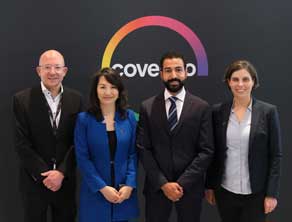
The collaboration seeks to develop a circular economy model for medical devices by proving both technical feasibility and economic viability while navigating the complex regulatory landscape of medical waste management. In cooperation with additional partners in the UK – including Allmed’s distribution partner Kimal, a leading regional hospital trust and a specialised recycler – Allmed and Covestro are now preparing for their first recycling trials.
“The circular economy in healthcare is still emerging – but it holds tremendous potential. With this feasibility study, we want to demonstrate that even complex applications like artificial kidney filters can be circular and become a valuable source of high-quality polycarbonate recyclate instead of being incinerated or sent to landfill,” says Lily Wang, Global Head of Engineering Plastics at Covestro.
Blood purification devices can save lifes, but also require significant resources. Covestro, Allmed and Kimal work in making them more circular.
Allmed is equally committed to ambitious sustainability goals: “Blood purification devices are essential for life-saving treatments but also require significant resources. Our ambition is to show that high medical performance and ecological responsibility can go hand in hand,” explains Ahmed Sorour, CEO at Allmed.
(PRA)SUBSCRIBE to Get the Latest Updates from PRA Click Here»