Recycling: Fraunhofer repurposes waste into fibres for roofing
Among the dissenting voices on rising plastic waste, the United Nations Environment Programme (UNEP) has reported that more than 20 million tonnes leak into waterways and aquatic ecosystems every year. With plastic consumption continuing unabated and 430 million tonnes produced and used annually, the volume of plastic waste is projected to triple by 2060.
UNEP has cited proven solutions: reducing plastic use, using non-plastic alternatives, redesigning products for reuse, repair, and recycling; and improving waste management systems.
However, recycling has remained low globally, pegged at only 9%, with much of the waste and a significant volume still ending up in landfills or in nature.
Thus, as part of the Fraunhofer Cluster of Excellence Circular Plastics Economy (CCPE), the Fraunhofer institutes IAP, IML, UMSICHT, IVV, ICT, IME, and IOSB, under the project management of the LBF, are nearing completion of a joint research project that has set two priorities:
1. Is it possible to recycle and add different waste streams to produce high-quality recyclates that can be used to produce fibres and films that can be further processed into competitive nonwovens and films for roofing membranes?
2. Can fibres be produced from bio-based polymers that can not only be spun into nonwoven fabrics, but whose degradation in the environment can be adjusted and at the same time pose no risk to the environment?
Making recycled plastics economically viable
In the case of mass-produced plastics such as PE and PET, the proportion of recycled plastics in products available on the market still has room for improvement compared to the quantities of new materials put into circulation.
The proportion of bio-based polymers is even lower in comparison and limited to a few applications. Regulatory changes in particular, but also increasing customer demand, are driving a growing need for more sustainable solutions.
Plastic recyclates can become more widespread if compounders and end users have access to higherquality recyclates.
Despite the many fractions offered by the various collection systems, the possibilities for reuse are limited because contaminants and foreign materials make sorting, purification, and processing into recyclates difficult for recyclers.
As a result, recycled materials cannot compete with virgin materials due to quality or economic factors. Plastics developed from renewable raw materials are often not yet available in large quantities and are limited in their application due to their mechanical properties or their degradation properties in end-of-life scenarios.
Recycling process chain for PP/PET for nonwovens and geotextiles
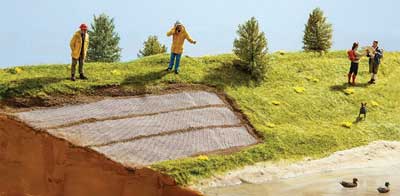
In the Fraunhofer project, which is nearing completion, the entire process chain for PP and PET was developed, from sorting previously low-quality material streams through the recycling process (solvolysis (glycolysis) and solvent-based recycling), the application-optimised improvement of recyclate quality through the selection of customised additive packages by Fraunhofer LBF, and shaping.
As application scenarios, fibres for nonwoven production (PET and PP) and films (PP) for the manufacture of roof underlayments were specifically developed.
With regard to the use of biopolymers, the project focused on polylactide (PLA) and polybutylene succinate (PBS) for the production of biodegradable geotextiles, which are subject to a defined degradation period at the end of their defined service life.
The development work for both the recycled plastics and the biopolymers was supported from the outset by life cycle analyses (LCA). In addition to controlled degradation in soil, tests were also carried out in aquatic environments to verify the ecotoxicological safety of the new developments.
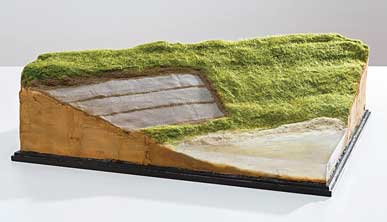
Fraunhofer LBF contributed its expertise and many years of experience in aging and weathering tests and in the development of additive concepts to the project.
The subsequent applications will have to meet special requirements in terms of stability and, in the case of biopolymers, controlled degradation of the materials at the end of their service life, with the additives department ensuring that these requirements are met.
Fraunhofer says it was able to demonstrate that the degradation behaviour of bioplastics can be adjusted by adding a customised additive system. In addition, the additives were found to have no negative effects on ecotoxicological properties.
Furthermore, it was shown that high-quality processed waste streams can be made suitable for the intended applications through re-additivisation.
(PRA)SUBSCRIBE to Get the Latest Updates from PRA Click Here»