Green news: RadiciGroup/Lycra launch recycling of mixed-fibre garments; UPM launches circular renewable black pigment
Recycling of garments made from different types of fibres has always represented a major challenge for the textile industry. In the absence of a chemical or mechanical process capable of separating and recovering the individual materials, these garments have so far become waste destined for incineration or landfill.
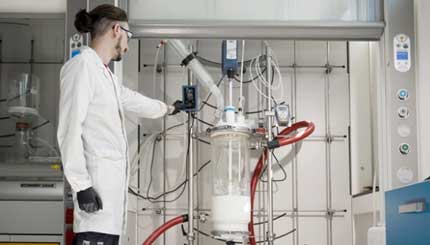
Now, Radici InNova, RadiciGroup division dedicated to research and innovation, has developed an innovative recycling process based on selective dissolution technology, capable of treating mixed textile waste — such as swimwear, tights and leggings — and recovering both nylon and Lycra fibre, making them available again for the production of new garments.
The collaboration with Lycra and Triumph, internationally-renowned lingerie brand, has made it possible to validate the process by using the recovered fibres to create a 100% recycled lingerie set.
The process, internationally patented, uses non-toxic, non-flammable and environmentally compatible solvents. It can be applied to the main types of nylon (PA6 and PA66) and is economically sustainable because it allows for the recovery of both nylon and Lycra fibre, regardless of their respective proportions in the fabric, as well as the solvent itself.
The project began four years ago, when Radici InNova launched the study of an innovative process for the dissolution and separation of mixed textile fibres. After the initial development phase, subsequent tests made it possible to recover samples of Lycra fibre from multi-material fabrics, which were then sent to
The next step was to demonstrate the feasibility in practice: Triumph provided its own production surplus, a fabric containing 16% Lycra fibre. From this material, Radici InNova succeeded in recovering both Lycra fibre and nylon.
The fibre was then re-spun by Lycra, while RadiciGroup processed the recycled nylon to produce new Renycle yarn. Using these recycled yarns (Lycra fibre and Renycle), a 60-m black fabric was created, which Triumph used to produce a coordinated lingerie set, demonstrating the possibility of closing the loop: from textile waste to new garments.
The result achieved so far by Radici InNova, Lycra and Triumph should be considered a prototype (concept garment) designed to prove the technical feasibility of recycling mixed textiles and lay the groundwork for its future industrialisation, the companies say.
In other news, Helsinki-based materials firm UPM has introduced what it says is a groundbreaking innovation, circular black pigment, that redefines the role of black as a colour in sustainable packaging. UPM claims it is the world’s first bio-based, near-infrared (NIR) detectable, carbon-negative pigment.
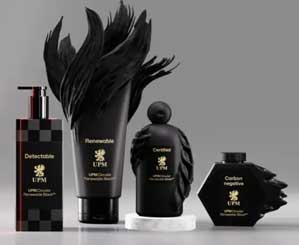
For years, black packaging has been associated with recycling challenges as the conventionally used pigments are made from carbon black which inhibits NIR detection and makes the materials invisible to the sorting systems in recycling facilities. UPM adds its pigment changes that narrative.
UPM’s new pigment is derived from renewable lignin and certified by third-party standards such as FSC, PEFC and ISCC Plus.
The black pigment is part of UPM’s portfolio of CO2-negative solutions to be produced at the company’s EUR1.3billion biorefinery in Leuna, Germany. The facility is the largest industrial-scale investment in biochemicals in Europe and converts sustainably sourced hardwood into next-generation biochemicals, enabling the transition from fossil-based to renewable materials across multiple industries.
(PRA)SUBSCRIBE to Get the Latest Updates from PRA Click Here»