COP30: funding approved; future without fossil fuels remains unseen
At the global level, a long history of fossil fuel use is believed to have caused a build-up of heattrapping gases, driving up the planet’s average temperature. According to the World Meteorological Organisation (WMO), each degree of warming above the 1.5°C limit is expected to increase extreme daily rainfall by 7%.
Echoing the same sentiment, the United Nations Environment Programme (UNEP) Emissions Gap Report warns that even if countries meet their climate pledges, global temperatures could still rise 2.3°C to 2.5°C by the end of the century. This is slightly better than last year’s forecast but still enough to trigger more droughts, typhoons and other extreme weather.
As the world reviews progress under the Paris Agreement, a legally binding international treaty on climate change enforced in 2016, questions remain about whether global efforts are enough.
Serving as a critical global forum for countries to review the Paris Agreement and accelerate climate commitments, the 30th session of the United Nations Climate Change Conference (UNFCCC) Conference of the Parties (COP30) took place recently in Belém, Brazil.
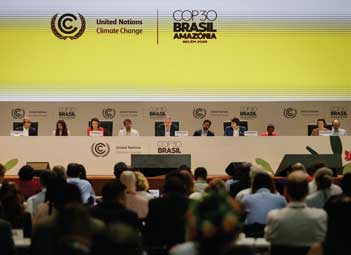
The conference initiated momentous objectives, including implementing the outcomes of the COP28 Global Stocktake, which had shown that the world is off track to meet the 1.5°C warming limit. COP30 also strengthened the UNFCCC Action Agenda, mobilising voluntary climate action from civil society, businesses, and investors through a new five-year plan aligned with Paris goals.
Climate finance was another priority, focusing on scaling up support for developing countries from the initial US$300 billion toward the US$1.3 trillion annual target by 2035, guided by the Baku to Belém Roadmap. Nations presented updated Nationally Determined Contributions (NDCs) to assess gaps between current plans and Paris Agreement targets.
Other highlights at the COP30 included forest protection, particularly in the Amazon, supported by Brazil’s US$125 billion Tropical Forest Forever Facility. In addition, the conference addressed gender equality and human rights, strengthening the Gender Action Plan and launching the first official Justice and Human Rights Days. Finally, COP30 tackled super pollutants through the Super Pollutant Country Action Accelerator, providing initial funding to seven countries to reduce emissions of these highly warming pollutant.
No consensus secured for fossil fuels; funding approved
After days of grueling discussions and intense negotiations, COP30 concluded with a commitment to mobilise at least US$1.3 trillion per year by 2035 for climate action, alongside a plan to triple funding for adaptation.
The conference also introduced two major initiatives: the Global Implementation Accelerator and the Belém Mission to 1.5°C, designed to help countries deliver on their national climate plans. For the first time, C O P 3 0 recognised the importance of combating climate disinformation, pledging to promote accurate and reliable information.
However, the forum stopped short of directly addressing the energy transition, leaving many nations and civil society groups disappointed. Expectations had been high for a formal plan to phase out fossil fuels, with over 80 countries supporting Brazil’s proposal.
While a draft text had included it, the final outcome instead referenced only the “UAE Consensus” from COP28, which called for “transitioning away from fossil fuels.”
Experts warned that fossil fuel use must drop to zero by 2040 to 2045 to avoid global temperatures rising by up to 2.5°C – a scenario that could destroy coral reefs, collapse the Amazon rainforest, and speed-up the melting of Greenland’s ice sheet.
To address these challenges, COP30 established two roadmaps: one to halt and reverse deforestation, and another to guide a just, orderly, and equitable transition away from fossil fuels, providing the necessary resources in a planned and fair manner.
Meanwhile, environmental organisation Greenpeace warned that so-called “false solutions,” such as carbon offsets, carbon capture and storage (CCS), and similar solutions are little more than a ploy that enables polluters to put off actual reductions and sidestep transformative climate action. These measures cannot replace urgent emission cuts, yet they appear to be the dominant approach at the forum.
Greenpeace asserted that to stay within 1.5°C, the world must drastically cut fossil fuel use, end deforestation, safeguard ecosystems, and uphold the rights and solutions of Indigenous and local communities.
In short, major polluters have long profited from environmental harm, and it is time for them to take responsibility and pay their fair share, it said.
(PRA)SUBSCRIBE to Get the Latest Updates from PRA Click Here»