A panoptic plastic waste solution under pressure
Finding a win-win solution to end plastic pollution, one that satisfies every sector, remains elusive. Yet, environmental advocates like UK-based NGO WRAP (Waste & Resources Action Programme) continue to push forward, undeterred by the setbacks, says Angelica Buan in this article.
A treaty in jeopardy
A crumpled plastic wrapper here and a discarded PET bottle there: all these are a slow-burn build-up of plastic waste that has turned into a pollution problem too gargantuan to rein in; unleashing its toll on the world’s ecosystem and slowly choking it.
Plastic pollution is a global problem, according to the United Nations Environment Programme (UNEP), which says up to 23 million tonnes of plastic waste enters aquatic ecosystems, polluting lakes, rivers, and seas.
The damage is heavy and far reaching, according to the Global Plastic Action Partnership, which says of the 460 million tonnes/year of plastic produced, only 9% is recycled. Furthermore, without intervention, plastic waste is expected to triple by 2060 and incur an estimated cumulative damage cost of US$281 trillion between 2016 and 2040.
On this ground, the United Nations Environment Assembly (UNEA) convened in 2022 (its fifth session) and adopted a resolution that mandated it to form the Intergovernmental Negotiating Committee (INC) to establish an international legally binding instrument on plastic pollution, including in the marine environment (ILBI).
The Global Plastics Treaty attempts to cover, as comprehensively as possible, a full life-cycle approach, from design and production to disposal and waste management. The treaty, initially slated to be finalised by the end of 2024, missed that deadline.
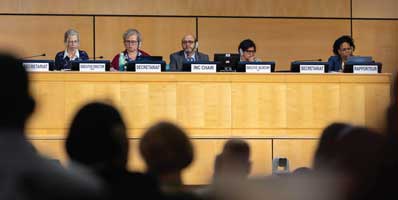
At INC-5.1, delegates were unable to reach agreement on a new treaty. When the high-stake talks continued for INC-5.2, the process took a downturn, with key disputes still unresolved.
While INC-5.3 is planned, it is expected to focus only on organisational and administrative matters. In the meantime, the resumption of talks on the global treaty is uncertain or may never happen.
Treaty stalemate: are industries turning a blind eye?

The issue of stemming plastic pollution is indeed polarising. It is no surprise that when issues like this are tackled, opposing voices will emerge, and at INC-5.2, they eventually drown out those who proposed a more systemic approach to addressing plastic waste
The so-called “petrostates”: oil-rich and oilexporting countries such as the US, Saudi Arabia, Russia, India, and others, along with allied industry lobbyists allegedly undermined the negotiations, countering for voluntary measures rather than a binding obligation, and prefer focusing on plastic use and waste management instead of capping production or imposing bans or restrictions on hazardous chemicals, among other proposals that would affect their fossil fuel industries.
Among the delegations that expressed disappointment, Graham Forbes who was the Greenpeace head of delegation to the Global Plastics Treaty negotiations and global plastics campaign lead for Greenpeace USA, said, the plastics crisis is accelerating and that the petrochemical industry seems intent on prioritising short-term profits at great cost to the planet.
He stressed that civil society has been calling for a strong, legally binding treaty that reduces plastic production, safeguards human health, secures fair and reliable financing, and stops plastic pollution from extraction to disposal, and he urged world leaders to pay attention, likewise reminding them that the future of both human health and the planet rest on these decisions.
The World Wildlife Fund’s (WWF) global plastics policy lead, Zaynab Sadan, said the choices being made will affect generations ahead, and that the world will eventually look back on this period and remember how these choices were made, urging the need for courage rather than compromise.
WRAP: not letting up on plastics action
Meanwhile, Catherine David, CEO of the Waste and Resources Action Programme (WRAP), said the outcome of INC-5.2 was “a missed opportunity,” as well as a setback for those working to reduce plastic pollution. She added that without binding global rules, the world would continue to fall short of the pace and scale of action required.
WRAP, a UK-based environmental NGO, attended the Geneva meeting and co-hosted a side event with the Ellen MacArthur Foundation.
In an interview with PRA (www.plasticsandrubberasia.com), WRAP’s David shared that the outcome of the recent INC-5.2 meeting left many observers disappointed, as what was expected to be the final round of negotiations on a treaty ended without an agreement.
Nevertheless, she explained that this setback does not halt the work of the Plastics Pact Network (PPN). The network, which was established before the treaty process began, continues to operate independently of the negotiations.
“PPN was set up before the Plastics Treaty process began and is delivering impact independently of the Global Treaty and its progress is not directly linked with the progress of the treaty. The PPN is comprised of 13 pacts all focused on advancing to a circular economy of plastics and reflecting the priorities and challenges in each market that they operate in. This will continue,” David explained.
Voluntary initiatives to lead the way
According to WRAP, the absence of a treaty shows the continued value of voluntary initiatives that are already producing results, but noted it still supports a global agreement to create consistent expectations across markets and encourage broader investment in circular systems.
“The lack of a global treaty shows that voluntary initiatives that are delivering positive impact NOW, have a crucial role to play in demonstrating to negotiators what can be achieved by leading countries and businesses. Why WRAP and the PPN is keen to see a global treaty is so that it will ‘level the playing field’ and mean many more countries and businesses will need to adopt more circular plastics policies and business practices – helping unlock much needed investment,” the organisation said.
Pertaining to the discussion deadlock in Geneva, WRAP reiterated its support for a treaty that covers the full life cycle of plastics - from production to design, consumption, and end-of-life.
“We do call for an ambitious treaty that covers the full life cycle of plastics as we believe a waste management only focus would not incentivise the reduction in growth of plastics and lead to a growing environmental issue,” according to David.
Funding an important element of treaty
WRAP also says that as regards funding the implementation of the global treaty, this is one element of the negotiations that will need to be resumed when it reconvenes.
The funding types and sources will vary depending on the need, e.g., funding for innovation and exploring new materials and solutions is likely to be a different funding source than funding for infrastructure to sort and recycle more plastics.
It also adds that many countries are introducing/have introduced EPR policies to help fund increased recycling and collection and this is an important component of any future funding requirements.
Meanwhile, within this broader context, WRAP elaborated on how plastics pacts work at the national level.
“In short, a plastic pact is a voluntary agreement, open to any major business who uses, creates, collects, recyclers plastics to work with the value chain to overcome the challenges to transition from a linear to circular plastics economy.
“ WRAP further explained that this collaboration often involves agreeing on design guidelines that ensure packaging is recyclable and retains value in the recycling system.
“For example, this may be to define, agree and then implement good design guidance that means businesses design and specify plastic packaging that can be recycled and has a value to the recycling sector. So, in the UK, this has led to a near elimination of PVC rigid packaging and non-NIR detectable black plastic packaging. Other markets may have different priorities depending on their situation and infrastructure,” said WRAP’s David.
Circular economy and a legislation to boost all initiatives
On the matter of recycling technologies, WRAP stated that there is no single prescribed approach, but pacts follow established principles for a circular plastics economy, saying that both mechanical and non-mechanical recycling are included within pact targets so long as the output can be used again in plastics packaging, for example pyrolysis to a fuel oil.
Meanwhile, progress across all pacts is tracked through annual data reporting from member companies that place packaging on the market.
“These annual reports are published and help each pact secretariat, and the members focus resources and efforts on the key challenges. Data gathering is historical, and change takes time, so while progress may be slow in the first few years, experience tells us that pace gathers as businesses embed the targets and policies develop. The IPP annual reports are online, and the 2024/5 report will be published in the coming few months,” David shared.
That said, WRAP pointed out the significance of plastics pacts in addressing plastic pollution.
“It works at a systemic level to reduce the waste arising, ensure that the plastic that is produced is recyclable or reusable and help create a demand for recycled plastics to keep it out of the environment,” said the association.
So, the pacts are contributing to the solution, however, they are only ever part of the solution as they do not cover the majority of plastic placed on the market. This is why a robust and well-enforced legislation is required to complement the many positive initiatives that exist, WRAP concluded.
(PRA)SUBSCRIBE to Get the Latest Updates from PRA Click Here»