Specialty chemicals: staying on course for growth
As the going gets tough in the global market, the chemical industry is bracing itself with a plan to gallop ahead into 2026, with joint ventures and expansion plans in Asia, says Angelica Buan in this article.
Galloping into the year of the horse with optimism

No pun intended, but legend has it that 2026, the Year of the Fire Horse, is expected to bring a more stable economic climate and a general return of confidence after years of imbalances and volatile trends. One sector that could use a strong break from the flat and sluggish growth of recent years is the chemicals industry.
The global chemicals industry has been stuck in a prolonged down-cycle, weighed down further by geopolitical realignments and other headwinds that have slowed any momentum toward growth.
Consultant Deloitte’s 2026 industry outlook projects a grim year ahead as the sector deals with sluggish demand, excess capacity and rising uncertainty.
According to the report, weaker economic conditions, continued geopolitical and trade tensions in Europe and the Middle East and supply chain disruptions have dashed hopes for stronger growth in 2025. A regulatory environment that has become increasingly fragmented across regions has also set a bleak precedent for next year’s prospects.
Deloitte reported that net profit margins, which averaged 5.8% between 2000 and 2020, fell sharply in 2023 and stayed low through the first half of 2025. Companies responded with bolder moves such as cost cuts, restructurings, closures and divestments. This trend is expected to continue into 2026 as companies focus on earnings and adjust portfolios more strategically.
Positioning in an innovation-driven market
On the other hand, the specialty chemicals market remains robust. According to Precedence Research, the global specialty chemicals market is poised to grow from US$940.7 billion in 2025 to over US$1.3 trillion by 2034, at a CAGR of 3.94%. Asia-Pacific remains the largest market, driven by industrialisation and urbanisation in India and China.
Innovation is driving market resiliency, and companies are relying on new technologies and collaboration with start-ups for solutions that cut costs and improve production efficiency, rather than depending solely on in-house development.
As well, digital investment, and science-based policies are keeping speciality chemical manufacturers on an even keel, according to the 2026 contract manufacturing outlook by the Society of Chemical Manufacturers & Affiliates (SOCMA), the only US-based trade association for the speciality and fine chemicals industry.
The report, in which nearly 70% of survey responses came from small and mid-sized companies with annual revenues of US$100 million or less, found that companies are investing in automation, digital systems, and health, safety, and environmental improvements, with the majority of respondents boosting reliability and expanding digital infrastructure.
Charging forward: companies expanding to China

In the Asia-Pacific region, China and India dominate the market, with expected annual growth rates of 7.4% and 6.8%, respectively, from 2022 to 2030. By 2030, the two countries alone will account for two-thirds of the region’s total market value, according to a Krungsri Research report on speciality chemicals published in August 2024.
China is aiming for self-sufficiency in the chemicals sector by shifting from being import-dependent to becoming an exporter, and ultimately a leading global supplier. For specialty chemical majors that stand to benefit from China’s competitiveness goals, capacity expansions, consolidation and joint ventures are in the playbook to reorganise business lines, gain scale, and access new technologies and markets.
One such company taking on the China market is speciality chemicals firm Nouryon that has completed a capacity expansion for metal alkyls production, which will ultimately double its ability to produce triethylaluminum, a co-catalyst essential in manufacturing PE/PP for packaging, automotive components, and consumer goods.
In 2026, the company will open an organic peroxides innovation centre in Tianjin, China, to provide specialist polymer application capabilities.
Moreover, in 2027, Nouryon will also begin producing modified methylaluminoxane (MMAO) in China, a key component in catalysts for polyolefin elastomers used in solar panels, another rapidly growing segment in the country.
Nouryon’s Jiaxing site, which houses an R&D laboratory established in 2024, focuses on improving process efficiency and developing new production methods for metal alkyls, supporting polyolefin innovation and regulatory compliance in China.
Nouryon operates metal alkyl production sites in La Porte, Texas; Rotterdam, the Netherlands; and Jiaxing, China. Application centres are located in Deventer and Jiaxing, with transfilling and blending stations in China, Paulínia, Brazil, and Mahad, India.
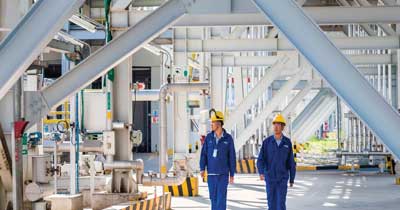
Germany-based chemicals supplier BASF is responding to structural overcapacities in the global chemical fibre market by consolidating its Asian polytetrahydrofuran (PolyTHF) operations into its Caojing site in China and discontinuing production at its Ulsan site in South Korea. The closure is targeted for completion in 2026.
After the closure, BASF, which generated sales of EUR65.3 billion in 2024, will continue supplying customers with PolyTHF, leveraging its regional production bases in Caojing, Ludwigshafen (Germany), and Geismar (US). Together, these sites have a total capacity of 250,000 tonnes/year. PolyTHF is an essential starting material for elastic spandex and elastane fibers used in textiles such as swimsuits, sportswear, and underwear.
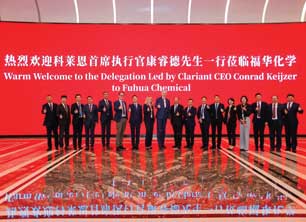
Along the same vein, Swiss chemical firm Clariant has forged a joint venture with China’s Shaanxi Fuhua Chemical for a new facility producing halogen-free flame retardants in Leshan, Sichuan Province, China.
The CHF100 million expanded capacity at Clariant's Daya Bay facility, along with the new Nylostab S-EED production line in Cangzhou, which opened in early November, is expected to further strengthen Clariant’s position in the country and serve industries such as building and construction, automotive, and electrical/ electronics.
The company adds it is directly responding to the tightening technical and regulatory environment in these sectors on traditional flame retardant technologies.
(PRA)SUBSCRIBE to Get the Latest Updates from PRA Click Here»