Covestro news: BioBTX to produce aromatics from waste; Partners KOLLEKT research project for recycling of auto components
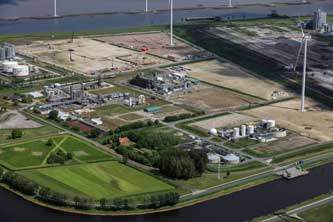
Dutch circular chemistry technology developer BioBTX is building its world’s first commercial-scale plant to transform mixed plastic waste into high quality aromatic chemicals based on its in-house developed ICCP (Integrated Catalytic Cracking Process) technology. Materials firm Covestro has been a shareholder and strategic partner of the Groningen-based company since 2024, with a mid-single-digit million Euro stake.
The plant, which shall create 35 new jobs, will be built at Chemical Park Delfzijl at the northern Coast of the Netherlands. It will use BioBTX's proprietary ICCP technology, which converts the type of mixed plastic waste that would otherwise be incinerated or put to landfill via catalytic pyrolysis into aromatic oil consisting of benzene, toluene and xylenes (B-T-X). These are the same building blocks the chemical industry uses today in coatings, pharmaceuticals and performance materials. They can also be used for the isocyanate production (MDI/TDI) of Covestro, out of which soft foam for e.g. mattresses or rigid foam for insulating refrigerators are made.
In total, the plant is expected to recycle about 20,000 tonnes of waste and produce around 10,000 tonnes of renewable aromatic oil and 8,000 tonnes of sustainable by-products from it annually. Compared to conventional, fossil-based BTX production, the process is expected to cut greenhouse gas emissions of the resulting chemical building blocks by 70 to 80%.
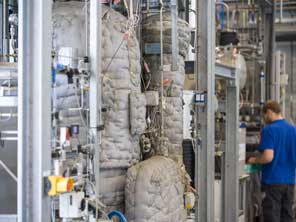
This milestone concludes a 14-year journey from an idea in 2012 through lab- and pilot-scale to commercial execution. While this first plant focuses on mixed plastic waste, the ICCP technology is feedstock-flexible, with the potential to expand to other sources in the future, such as biomass.
Meanwhile in related news, Covestro announced its participation in the KOLLEKT research project — a publicly funded, interdisciplinary consortium dedicated to developing recyclable product concepts for automotive lighting, mechatronic and electronic components.
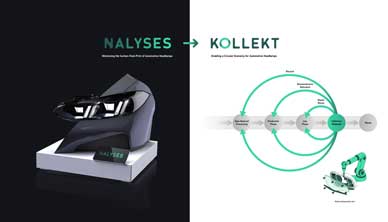
The three-year project, funded by the German Federal Ministry for Research, Technology and Space (BMFTR) under the CircularGlowUp funding framework and supervised by the Karlsruhe Project Management Agency (PTKA), addresses one of the automotive industry's most pressing challenges: how to keep materials in use longer, reduce resource consumption, and build genuinely circular value chains.
KOLLEKT brings together Forvia Hella as coordinator alongside partners BMW, Covestro, Geba, Fraunhofer IEM, Fraunhofer UMSICHT, the University of Paderborn, Hamm-Lippstadt University of Applied Sciences, the Helmholtz-Zentrum Dresden-Rossendorf (HZDR), and SW Maschinenservice. The project runs from June 2026 to May 2029, with a total BMFTR funding volume of EUR4.371 million including project lump sums.
The automotive industry faces growing pressure from resource scarcity, supply security concerns, and tightening regulatory requirements — most notably the EU End-of-Life Vehicles (ELV) Regulation. Technological hurdles, cost pressure, and insufficient product recyclability have so far prevented efficient plastics cycles from becoming established at scale. KOLLEKT directly addresses this gap by placing "Design for Circularity" at its core — product design optimized for recyclability from the very beginning, complemented by four R-strategies: Repair, Re-Use, Remanufacture, and Recycle. KOLLEKT researches how future lighting components can be made repairable, reusable, and recyclable — and what production and logistics processes this requires.
As a key materials partner in KOLLEKT, Covestro says it contributes its expertise in high-performance polymers and sustainable material solutions — working across the full circular value chain, from supporting circular product design and material concepts through to the evaluation of recycling pathways for polycarbonate.
(PRA)SUBSCRIBE to Get the Latest Updates from PRA Click Here»