No more cheap oil: breaking petrochemical dependence through recycling
The plastics industry is faced with tightening petrochemical feedstocks and it is pushing back by improving recycling technologies and adopting waste plastic recycling to reduce the deployment of virgin plastic to sustain a well-greased supply chain, says Angelica Buan in this report.
“Cheap” oil supply on the edge
The Strait of Hormuz, a 104-mile-wide waterway flanked by the Persian Gulf and the Gulf of Oman, has lately suddenly become the most talked about place on earth – not due to its heavily traversed waters, but because of its role as a crucial chokepoint, with its closure due to the Middle East tensions causing severe, crisis-level impacts on the world economy, and even dividing nations and breaking alliances.
Today, about 20% of global oil consumption is in a state of havoc, with millions of barrels of crude oil production as well as natural gas production put offline. For the plastics industry, a disrupted petrochemical supply chain has raised plastic prices, notwithstanding pharmaceuticals, transport , and food processing industries that have all been hit by the combined energy and feedstock shock.
The chokepoint-turned-snake pit reveals a harsh lesson: the world’s dependency on petrochemicals and oil industries to create products has limits, and supply chains or alternatives to cheap oil must be diversified, if not entirely decoupled from it.
Recycling: an urgent strategy needed
Recycling plastics and using recycled feedstocks are among the most undervalued strategies for reducing global fossil fuel demand. Most plastics produced today depend on fossil fuel feedstocks, while plastic manufacturing accounts for around 6% of global oil consumption.

According to the Geneva Environment Network, the global growth of the plastics industry is largely driven by the availability of cheap natural gas and oil, and growing investments from the fossil industries.
With the chokepoint gated and shipment flows restricted, this growth could take a negative turn. Recycling plastics reduces the industry’s reliance on petrochemicals and the liberal use of virgin raw materials, while ensuring a secure supply of recycled feedstock.
However, recycling has not caught up with the amount of waste plastics generated. Researchers from China’s Tsinghua University found that the rate of recycling has hovered below 10%. Meanwhile, only 6.9% of the 106 billion tonnes of materials used annually by the global economy come from recycled sources, according to The Circularity Gap Report 2025 (CGR) released in 2025 by Circle Economy in collaboration with Deloitte Global. The report stated that the global material consumption is outpacing population growth and generating more waste than recycling systems can handle.
While the issue can be addressed with global circular economy targets, system-level transformation, and multilateral collaboration, a more direct response would be reducing reliance on virgin materials by prioritising recycled content, enhancing resource efficiency throughout operations and value chains, and designing products for longevi ty through durable design, repairability, and modularity.
Disrupting fossil oil disruption with pyrolysis

Chemical recycling offers a more transformative route for reducing reliance on fossil crude oil. The most commercially relevant method is pyrolysis, a process that thermally breaks down plastic polymers in the absence of oxygen, producing circular feedstocks such as pyrolysis oil, gases, and char.
Major players such as Swiss-based Dutch energy and commodity trading company Vitol’s WPU, French multinational integrated energy company TotalEnergies, and German polymer materials manufacturer Covestro are among the latest in a roster of industry prime movers that have invested in pyrolysis to recycle end-of-life plastics.
WPU, Vitol’s plastics recycling business, is building a new chemical recycling facility for end-of-life plastics at the Netherlands’ Port of Rotterdam, one of Europe’s largest ports, alongside Vitol’s refinery VPR, acquired in 2017 by Vitol’s wholly owned subsidiary, Vitol Refining Group BV. The location is strategic, as the facility connects recycled output with existing industrial infrastructure and end markets.
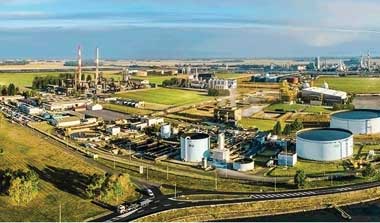
The new pyrolysis plant, which will incorporate furnace technology designed to reduce emissions and lower energy use, will have the capacity to process 80,000 tonnes/year of post-consumer plastic, increasing WPU’s total recycling capacity to 100,000 tonnes/year.
The Rotterdam facility is expected to be one of Europe’s largest chemical recycling plants for end-of-life plastics, converting waste plastics into pyrolysis oil for the production of circular chemicals, intermediates, and new plastics, targeting a lower carbon intensity than fossil naphtha. According to WPU, the project is expected to meet growing demand for circular feedstocks and support European policy to add higher recycled content in products and the decarbonisation of petrochemical value chains.
WPU’s pyrolysis technology has already been deployed at its plant in Farevejle, Denmark, with a recycling capacity of 20,000 tonnes/year. It is currently operating near full capacity and serves as a reliable supplier to customers. WPU is among the first companies to deploy plastics pyrolysis at commercial scale for waste plastic.
Along the same vein, TotalEnergies has launched France’s first advanced plastics recycling plant, with a capacity of 15,000 tonnes/year, at its Grandpuits site southeast of Paris.
The new facility uses recycling technology supplied by its partner, UK-headquartered chemical recycling company Plastic Energy. The plant transforms hard-to-recycle plastic waste from French households, which is currently sent to landfill or incineration, into pyrolysis oil, through heating the waste to high temperatures in an oxygen-free environment and under pressure. This advanced recycling process makes it possible to recycle waste that cannot be processed mechanically, it adds.
The synthetic oil is then used as petrochemical feedstock, as a substitute for fossil fuels. It contributes to producing recycled plastics of the same quality as virgin plastics, compatible with the strictest requirements for food contact and medical applications.
TotalEnergies signed an agreement in 2023 with two French partners: eco-organisation Citeo and recycling company Paprec, to secure the plant’s long-term supply of plastic waste.
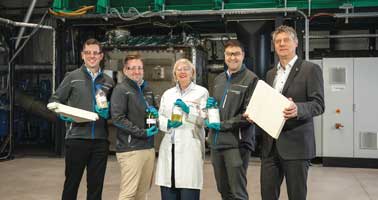
Meanwhile, Covestro and the Fraunhofer Institute for Environmental, Safety and Energy Technology (UMSICHT) have recently signed a contract to operate a 2,000 tonnes/ year pilot plant for pyrolysis of rigid polyurethane (PU) foam waste, primarily from end-of-life insulation PU materials. The technology specifically targets rigid foam because it is notoriously difficult to recycle due to its crosslinked molecular structure, according to Covestro. The plant will be operational by mid-2028. The resulting amount of aniline could be used to produce insulation for roughly 200,000 refrigerators.
The agreement covers Fraunhofer UMSICHT’s pyrolysis research expertise and existing chemical recycling infrastructure to implement and scale Covestro’s proprietary smart pyrolysis process, converting insulation waste from appliances and construction into high-purity re-aniline for the production of MDI (methylene diphenyl diisocyanate).
The resulting MDI meets the same purity standards as conventional MDI, with up to a 40% lower carbon footprint compared to fossil-based production routes.
The technological development builds on extensive research within Circular Foam, an EU-funded flagship project coordinated by Covestro with Fraunhofer UMSICHT and 23 other partners across Europe.
The development is significant for the MDI market, which is seeing growing demand for rigid PU applications in insulation, as well as in the automotive and construction industries.
Enhancing recycling for PET and acrylic plastics
Advances in chemical and mechanical recycling of commonly used yet hard-to-recycle plastics are coming into focus for more energy efficient systems that deliver optimum results.
Recycling PET trays, widely used for convenient food handling, preventing spoilage, extending shelf life, and reducing waste, addresses not only the environmental impact of such products but also food security and supply, which may be derailed by disruption in the oil supply chain.
According to Lucintel’s plastic tray market forecast to 2031, demand for plastic trays continues to grow and is expected to reach a CAGR of 5.2% from 2025 to 2031, driven by increasing demand from the food & beverage industry and the rising use in healthcare packaging.
In line with this, Spain-based Sulayr Recycling has bolstered its PET tray recycling operations by working with Tomra, a Norwegian sorting technology provider, to build a more stable and scalable system that turns used plastic trays back into new food-grade trays with full traceability.
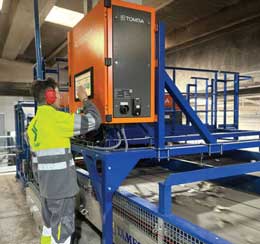
PET tray recycling is particularly difficult due to complex materials, mixed waste streams, and strict quality standards, according to Sulayr, which addresses this by focusing on a closed-loop, transparent-to-transparent recycling process, producing over 50,000 tonnes of recycled PET in 2025, or more than 4 million trays/day.
As quality demands increased, the company recognised that consistency was just as important as purity, with its technology officer explaining that reliable day-to-day performance is essential for tray-to-tray recycling, not just ideal conditions. To achieve this, Sulayr and Tomra co-designed the entire sorting process to ensure consistent, high-quality results that meet strict and evolving European standards.
This collaboration led to a system that delivers over 99.8% purity, enabling recycled material to match virgin plastic quality and be reused in food-grade applications. The improved process has increased material recovery, reduced waste, and allowed Sulayr to meet stricter customer requirements and expand into new markets.
Similarly, researchers at UK’s University of Bath offer a breakthrough solution for continuous yet environmentally friendly recycling of acrylic plastics.
Acrylic, sold under brand names including Perspex and Plexiglas, is made from the transparent PMMA. Approximately 3 million tonnes are used worldwide each year in a wide range of applications, including automotive components, screens, and construction materials.
Mechanical recycling is often the primary option for recycling waste acrylic plastics. The method involves shredding or melting the plastic to reform pellets for new uses. However, this leads to discolouration and a gradual decline in quality, whereby the recycled material can no longer be used for glass-like applications.
With pyrolysis, heating Perspex to 350–400°C to return the plastic to its monomer state, the process can be energyintensive and easily contaminated by other plastics.
The researchers developed a new method for recycling acrylic plastics that uses less energy, safer solvents, and maintains material quality so it can be reused multiple times. The process chemically breaks the plastic back into its original building blocks using UV light at much lower temperatures (120–180°C compared to the usual 350– 400°C), making it far more energy-efficient.
It also relies on non-toxic, sustainable solvents, offering a safer alternative to conventional methods. With over 95% conversion and more than 70% recovery of reusable material, the approach enables plastics to be remade into like-new products without degradation, unlike mechanical recycling, which reduces quality over time.
Dr Jon Husband, ISCC Research Fellow, who led the study with Dr Simon Freakley from the University’s Institute of Sustainability and Climate Change (ISCC) and co-author Innovation Centre for Applied Sustainable Technologies (iCAST) Director Professor Matthew Davidson, said current recycling methods are energyintensive and inefficient, and demand for cleaner, more efficient recycling technologies has never been greater. He added that plastic recycling is often economically challenging due to high energy costs and low-quality output, and that this work directly addresses both issues.
Overall, for the plastics industry facing the major challenge of reducing petrochemical dependence, there is no hurdle too great to overcome.
(PRA)SUBSCRIBE to Get the Latest Updates from PRA Click Here»