Additives: Adding elements of refinement in plastics
Far from being mediocre materials, modern plastics, engineered for heavy-duty and innovative applications, owe much of their performance to additives, says Angelica Buan in this article.
Reinventing materials
Traditional plastics have had a troubled past, often considered inferior to steel or glass in certain applications and viewed as an environmental concern due to their resistance to degradation, limited recyclability, and relatively low durability. Fast forward to today, additives deserve recognition for refining the properties of conventional plastics as they are, transforming basic polymers into highly capable materials with superior strength, flexibility, durability, and appearance, suited for demanding applications in automotive, construction, packaging, and healthcare.
Importantly, certain additives can extend product life and enable recyclability and even controlled degradation. In this sense, additives modify how plastics function and how they are perceived in modern material use.
Architecting sustainability and durability
Additive producers are laying the groundwork for developing solutions that meet the needs of different applications in terms of sustainability and structural integrity.
Tokyo-headquartered Kaneka Corporation’s biodegradable polymer Green Planet is jointly developed with Japanese sports equipment and sportswear company, Mizuno Corporation. It has been adopted for the warning zone at Vantelin Dome Nagoya, and is said to be the world’s first use of biodegradable artificial turf made with Green Planet in this application.
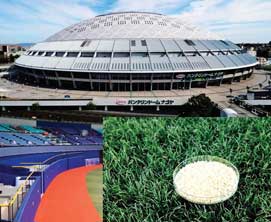
Green Planet is a 100% biomass-derived biodegradable polymer. Due to its biodegradability into CO2 and water by microorganisms living in soil and seawater, it can contribute to solving the problem of marine plastic pollution.
Artificial turf can break down into fragments that can unintentionally flow into the ocean and become microplastics, harming marine ecosystems. Kaneka says its Green Planet offers a texture similar to that of conventional artificial turf while maintaining durability. More than 90% of the resin used in the turf blades is derived from biomass, enabling a reduction in CO2 emissions compared with petroleum-based artificial turf.
Meanwhile, in broadening the accessibility of additive products German firm Evonik has expanded its collaboration with Dutch specialty chemicals distributor IMCD into the US market. The partnership, already established in Brazil and Canada, now extends IMCD’s distribution activities to the US.
The agreement will see IMCD distribute Evonik’s Visiomer specialty methacrylates, which feature lowodour, reactive diluents, improved mechanical properties, superior adhesion, and flame retardancy for a wide range of end-use applications, including coatings, adhesives and sealants, construction, composites and polymer synthesis.
Making a case for food-safe packaging materials
Packaging materials do more than just contain products. The inclusion of additives in plastics, coatings and adhesives bolsters the strength and safety factors of these materials. In packaging, additives are the “magic” ingredients for making packaging materials food-contact safe. Certain additives also provide antimicrobial and antioxidant properties, protecting product quality and extending shelf life.
Filling a long-standing industry demand gap for safer, high-performance food-contact antioxidant technology, US-headquartered chemicals company Dover Chemical Corporation offers Doverphos LGP-12, a high-molecularweight, polymeric phosphite antioxidant stabiliser developed to provide long-term thermal and oxidative stability in polyolefins and other thermoplastic resins. It is formulated as a liquid polymeric system and serves as an alternative to TNPP and other secondary phosphite antioxidants.
The product is free from alkylphenols and per and polyfluoroalkyl substances (PFAS) – also known as “forever chemicals” – and its polymeric structure is designed to reduce migration, making it suitable for sensitive food packaging applications where regulatory compliance and material safety are required. It also helps maintain clarity, mechanical strength and processing stability while supporting consistent performance across multiple processing cycles.
Applicable in materials such as LLDPE, HDPE and PP, Doverphos performs effectively in both virgin and recycled resin systems, helping preserve melt flow and colour while enabling the use of higher recycled content without loss of key properties. It has also received authorisation from the EU 2026/245 for use in food-contact plastic applications in the EU, following a positive EFSA opinion.
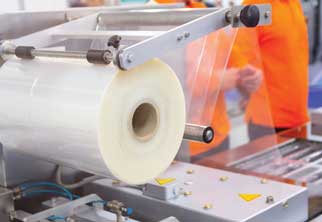
In a related move, targeting major barriers in film production – balancing multiple film properties while maintaining production efficiency – is the aim of US-based materials solutions company Avient Corporation, with the introduction of Hiformer Slip + Antistatic, a new additive for BOPP films.
The new super-concentrated liquid additive combines migratory slip and antistatic agents in a single formulation. Avient said this feature reduces production complexity while delivering consistent performance across key film properties.
Conventional BOPP film production uses separate additives for slip and antistatic properties, which can complicate inventory, increase dosing errors and affect film quality.
Hiformer Slip simplifies this as one additive replaces two separate products, reducing handling and formulation errors. It also offers precise performance control, maintaining coefficient of friction (CoF) between 0.20 and 0.35 with consistent static control, and improved optical properties with higher gloss and transparency than conventional multi-additive systems. It delivers efficiency at a 0.3-0.5% dosage, lower than traditional combinations. Cleaner operations and more predictable processing are achieved through direct liquid dosing into the extrusion feed zone using a high-precision unit, compared with solid masterbatches.
The material is approved for food contact applications and suitable for transparent, matte, pearl and white BOPP films in a range of thicknesses. To ease adoption, Avient supplies precision dosing equipment on loan at no cost to customers.
(PRA)SUBSCRIBE to Get the Latest Updates from PRA Click Here»