Country Focus: China forges ahead with industrial resilience
As a global economic powerhouse, China has kept its sails up, navigating the rough waters of disrupted supply chains amid ongoing fuel blockades and geopolitical mayhem, says Angelica Buan in this report.
Tenacity amid global oil shock
The US/Israel war against Iran has disrupted Gulf oil routes and supply chains. Soaring oil prices and a closed Strait of Hormuz are sending ripples through global markets, which are facing higher energy costs and tighter oil flows.
According to the US-China Economic and Security Review Commission (USCC), China, a major importer and committed partner to Iran, buys around 90% of Iran’s exported oil, generating tens of billions of dollars in annual revenue for the Iranian government’s core budget.
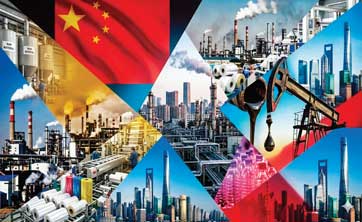
China’s top industries were already showing strong performance since the start of the year, months before the Gulf conflict began. According to the National Bureau of Statistics of China, manufacturing rose 6.6% in the first two months (of 2026), while equipment manufacturing grew 9.3% year-on-year, with hightech manufacturing rising over 13%, outpacing large industrial enterprises by about 7% and 3% respectively.
It is not surprising that China has maintained its dominant stake in the global market, as the top manufacturing country for the third consecutive year, according to the Asia Manufacturing Index (AMI) 2026 report by consulting firm Dezan Shira and Associates. AMI reports that China will continue to anchor manufacturing in the region, particularly in high-tech and capital-intensive industries.
Domestic coal to secure plastics supply
As the world’s largest producer and consumer of plastics, the country has faced challenges from ongoing policy shifts and geopolitical developments such as high US tariffs on feedstock, putting pressure on manufacturing.
Notwithstanding this, the country is able to source oil from Russia, a major supplier of naphtha, and is selfsufficient in plastics such as PVC, transforming it from a net importer to a net exporter, shielding the country from PVC supply uncertainties.
Meanwhile, the country’s abundant coal resources and coal-based production provide further insulation from petrochemical supply shocks.
For PVC, it uses the calcium carbide route, and it also leverages locally sourced coal to produce ammonia and fertilisers. As well, according to research firm ICIS’s insights in March, coal-to-olefins (CTO) PP producers in China are able to supply Southeast Asian converters with their PP requirements.
Getting on the bandwagon of green chemicals
Last year, China opened what it said is the world’s first industrial-scale chemical recycling plant with 200,000- tonne/year capacity in Jieyang city, Guangdong. Though China claims it’s the first, Site Zero in Sweden, catering to the Nordic market, also has a capacity to recycle 200,000 tonnes/year and opened in 2023. Site Zero can sort up to 12 types of plastic including four types of flexibles at a 95% success rate, but the waste has to be sorted before recycling, unlike China’s plant that uses a pioneering one-step chemical recycling process that converts low-value mixed plastics directly into high-value raw materials, bypassing sorting and achieving a 92% yield, according to plant operator Guangdong Dongyue Chemical Technology.
Municipal and provincial officials say the project will reduce plastic pollution, enhance China’s self-reliance on chemical raw materials, and position Jieyang as a hub for chemical recycling, with plans to expand capacity to 3 million tonnes/year in future phases.
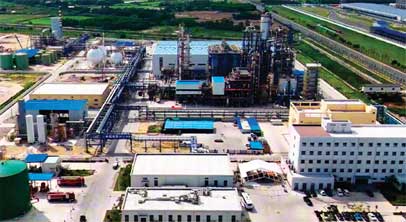
Amid changing global trade dynamics, the country’s industrial ecosystem and supply chain capabilities has seen several global players locate manufacturing to China for easier access to regional customers.
Early this year, Swiss subsidiary of Danish shipping group A.P. Möller-Maersk, Vioneo, dropped plans to build a EUR1.5 billion green plastics factory in the Port of Antwerp in Belgium, instead opting to construct it in China.
Vioneo said China offers better access to green methanol, a key raw material, which would lower costs, reduce carbon emissions, and accelerate production. The company added that the China-based plant is expected to emit less carbon overall than the originally planned Antwerp facility.
The Antwerp factory, intended to produce up to 300,000 tonnes/year of green PP/PE for sectors such as healthcare and automotive, was viewed as a boost to the port’s sustainability ambitions, but the site lost out due to the higher costs.
(PRA)SUBSCRIBE to Get the Latest Updates from PRA Click Here»