2026 - 2027 Exhibitions
Expansions: Celanese commissions LCP capacity expansion in China; Borouge opens EUR100 mn PP plant in Germany
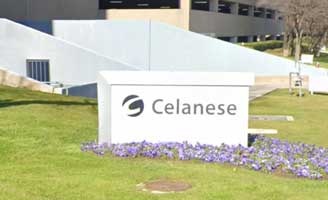
Speciality materials firm Celanese Corporation has announced the commissioning of expanded Liquid Crystal Polymer (LCP) manufacturing assets at its Nanjing, China, facility, though it did not state the tonnage of the capacity expansion.
The investment supports accelerating demand for high-performance materials in AI infrastructure and advanced connectivity, while serving as a strategic platform for growth in consumer electronics, automotive, medical, industrial and other demanding applications, it adds.
AI connectivity requirements are among the primary growth drivers for LCP. Rising AI infrastructure investment and rapid chip-level innovation require faster, more compact and more reliable interconnects. Celanese LCP solutions are engineered for high-speed connectors, backplanes, CPU sockets, memory interfaces and I/O connectors, where electrical performance, dimensional stability, flow and heat resistance are critical.
“The expansion of our Nanjing LCP capabilities strengthens the platform we have built to help customers move next-generation technologies from concept to commercialisation,” said Todd Elliott, Senior Vice President, Engineered Materials. “Combining local manufacturing in Asia with our global footprint, broad portfolio and deep application expertise allows us to collaborate more closely with customers, improve supply flexibility and respond faster as AI and advanced connectivity requirements evolve.”
The Nanjing unit adds local polymerisation and compounding, enabling Celanese to serve customers in Asia closer to where they design and manufacture. Together with the company’s US-based LCP manufacturing operations, Celanese says it creates a stronger dual-region supply model that shortens lead times and enhances supply flexibility and resilience. Celanese is now partnering with customers to align on supply plans for Nanjing-produced grades, providing a secure, easily accessible local supply source for rapidly growing AI data centre and electronics componentry demand.
The company claims it offers one of the broadest LCP portfolios in the industry, serving AI data centres, consumer electronics, automotive, industrial, medical and emerging technologies. Innovation priorities include low and tunable dielectric constant and dissipation factor (Dk/Df) technologies; high-flow, low-warpage materials; electrically and thermally conductive grades; and more sustainable ECO-B solutions.
Integrated polymerisation and compounding, backed by application development, testing and modelling expertise, allow Celanese to work with customers from material selection and component design through validation and qualification, it adds.
Testing resources include Dk/Df measurement in flow and cross-flow directions, electromagnetic interference shielding and dielectric strength testing, specialised flowability tooling, static and dynamic warpage analysis, and reflow simulation. Additionally, Celanese’s UL Client Test Data Program laboratory capabilities support flammability, relative thermal index and other testing to help reduce certification lead times.
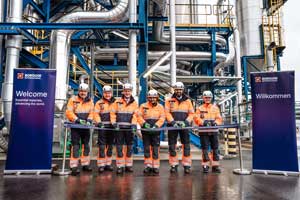
In other news, Borouge International has inaugurated its High Melt Strength polypropylene (HMS PP) facility in Burghausen, Germany. The start-up follows an investment of more than EUR100 million to triple production capability at the site, addressing growing demand for recyclable, high-performance foam solutions to cater to packaging and auto sectors.
The new facility marks a significant milestone in advancing Borouge International’s manufacturing footprint in Europe, ensuring a reliable supply of advanced PP foam solutions to customers across the region. The investment supports long-term economic growth in Bavaria, Germany, and underscores Burghausen’s importance as a strategic hub for manufacturing.
Developed using proprietary technology from Borouge International’s Innovation Centre in Linz, Austria, Daploy HMS PP is said to combine foamability with lightweight properties and mechanical strength. These characteristics enable manufacturers to optimise material use, reduce weight and decrease associated CO2 emissions.
By supporting the sustainability principles of “Reduce, Reuse, Recycle”, Daploy HMS PP addresses the growing demand for recyclable solutions across multiple industry segments:
- Daploy HMS PP is ideal for a wide range of consumer product applications, such as reusable coffee cups and food packaging. As a lightweight, recyclable material that supports reuse, it helps packaging producers meet the requirements of the EU Packaging and Packaging Waste Regulation (PPWR).
- In the automotive industry, Daploy HMS PP is used to produce ultra-lightweight foamed interior and under-the-hood applications, supporting reduction of vehicle weight and CO2 emissions. In addition, HMS PP is used as a mono-material solution, enabling recycling at the end of the vehicle’s life.
- In building and construction applications, Daploy HMS PP replaces heavier materials in insulation and panelling systems, reducing weight while maintaining performance and improving material efficiency.
With the investment Borouge says it underscores its commitment to Europe as a key manufacturing, innovation and growth hub, while meeting the need for more recyclable specialty products.
The project marks significant progress on the company's growth agenda, advancing its global expansion strategy and contributing to its target of 13.8 million tonnes/year of polyolefins capacity by 2030.
Subscribe to Get the Latest Updates from IMA Please click here




(Browse news archives)

©2026 Injection Moulding Asia. All rights reserved.