2026 - 2027 Exhibitions
BASF patents hot gas welding process for PPA plastics
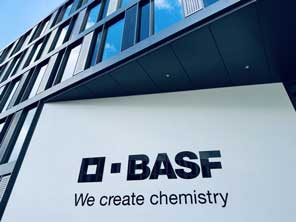
German chemical firmBASF says it has patented a novel hot gas welding process for plastics. The technology enables thermoplastic components – especially those made of Ultramid Advanced (polyphthalamide PPA) – to be welded significantly faster, more energy-efficiently and in a more material-friendly manner than with conventional hot gas welding processes, it adds.
At the heart of the patented solution is a special tool design: the hot process gas is no longer blown onto the welding ribs selectively from individual nozzles; instead, it is guided in a targeted manner along the welding ribs via channel-like structures. This ensures even gas distribution and minimises heat losses. The welding ribs are plasticised more homogeneously without requiring high gas temperatures or very small nozzle distances.
“Tests on PPA specimens have shown that the patented process can produce durable welded joints after very short heating times of around ten seconds,” says Stefan Mochev, Team Leader Materials & Parts Testing. “By comparison, with conventional hot gas welding technologies, it is often not possible to achieve any joint at all within these short times. At the same time, high weld seam strengths are achieved, making the technology particularly attractive for function-integrated components with high mechanical requirements.”
Another advantage is the greater melt layer thickness that can be achieved within a short time. This provides additional leeway to compensate for component warpage – an important aspect for large-format or complex components.
The patented hot gas welding process allows lower process temperatures and thus reduces the consumption of energy and inert gas. In addition, the distance between the gas nozzles and welding ribs can be designed to be larger, which virtually eliminates the risk of individual nozzles becoming clogged by molten material. This increases process reliability and reduces maintenance effort.
Due to their high thermal, chemical and hydrolytic resistance, PPAs are key materials for applications in eMobility and fuel cell systems. With the patented hot gas welding process, BASF says it expands the processing options for this material class and helps customers join components more efficiently and further increase functional integration.
German chemical firmBASF says it has patented a novel hot gas welding process for plastics. The technology enables thermoplastic components – especially those made of Ultramid Advanced (polyphthalamide PPA) – to be welded significantly faster, more energy-efficiently and in a more material-friendly manner than with conventional hot gas welding processes, it adds.
At the heart of the patented solution is a special tool design: the hot process gas is no longer blown onto the welding ribs selectively from individual nozzles; instead, it is guided in a targeted manner along the welding ribs via channel-like structures. This ensures even gas distribution and minimises heat losses. The welding ribs are plasticised more homogeneously without requiring high gas temperatures or very small nozzle distances.
“Tests on PPA specimens have shown that the patented process can produce durable welded joints after very short heating times of around ten seconds,” says Stefan Mochev, Team Leader Materials & Parts Testing. “By comparison, with conventional hot gas welding technologies, it is often not possible to achieve any joint at all within these short times. At the same time, high weld seam strengths are achieved, making the technology particularly attractive for function-integrated components with high mechanical requirements.”
Another advantage is the greater melt layer thickness that can be achieved within a short time. This provides additional leeway to compensate for component warpage – an important aspect for large-format or complex components.
The patented hot gas welding process allows lower process temperatures and thus reduces the consumption of energy and inert gas. In addition, the distance between the gas nozzles and welding ribs can be designed to be larger, which virtually eliminates the risk of individual nozzles becoming clogged by molten material. This increases process reliability and reduces maintenance effort.
Due to their high thermal, chemical and hydrolytic resistance, PPAs are key materials for applications in eMobility and fuel cell systems. With the patented hot gas welding process, BASF says it expands the processing options for this material class and helps customers join components more efficiently and further increase functional integration.
Subscribe to Get the Latest Updates from IMA Please click here





©2026 Injection Moulding Asia. All rights reserved.