2026 - 2027 Exhibitions
Automotive: Materials drive automotive sector
Recycling composite waste for auto components
The composite materials industry has experienced significant growth in sectors such as aerospace, railway, naval and renewable energy, thanks to its ability to provide lightweight, strong and durable solutions. However, these processes generate substantial amounts of plastic waste, especially single-use auxiliary materials such as vacuum bags, release films and absorbent fabrics.
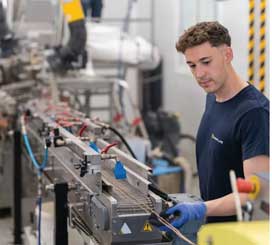
Now, a Spain-led Implicit project addresses this challenge through the development of multimodal recycling strategies that combine mechanical, physical and chemical technologies to recover these materials with the highest possible purity and enable their industrial reuse. The aim is to generate new recycled raw materials that can be used in applications, such as automotive components, technical textiles and urban furniture elements.
Funded by the Spanish Ministry of Science, Innovation and Universities through the Centre for the Development of Industrial Technology and Innovation (CDTI), with the support of European Union European Regional Development Fund (ERDF) funding, Implicit proposes a paradigm shift by transforming this waste into new resources.
The initiative brings together a consortium of eight entities representing different links in the plastics value chain. Participating companies include Solteco (project leader), Birziplastik, Faperin and Industrias Alegre, together with the technology centres AIMPLAS (technical leader), Eurecat, Tecnalia and Leartiker.
This collaboration makes it possible to tackle the challenge from waste collection and treatment to the validation of new products in real applications, thus addressing one of the industry’s main environmental challenges: the management of difficult-to-recycle waste.
From a technical perspective, Implicit develops a multimodal recycling approach for materials mainly manufactured with thermoplastic polymers such as PA, PET, PE and PP. This approach integrates mechanical recycling processes (shredding, separation and extrusion), physical recycling based on selective dissolution, and chemical recycling technologies such as solvolysis to remove thermoset resins and recover highvalue monomers and oligomers.
The project also addresses key challenges such as waste heterogeneity and resin contamination through advanced decontamination, compounding and additive formulation processes aimed at improving the mechanical properties of recycled materials and ensuring their industrial viability.
Covestro’s recycled PC/ABS adopted for Lexus

German materials firm Covestro announced that its polycarbonate/ABS material, Bayblend T85X R35 CQ, has been adopted for interior components in the Lexus ES. As part of Covestro’s Circular Intelligence (CQ) portfolio, the material delivers a 25% reduction in Global Warming Potential, measured in CO2 equivalents, compared to fossil-based alternatives, according to internal calculations.
The project was achieved through a partnership between Toyota Motor Corporation, Toyota Motor Kyushu, parts supplier Kojima Industries Corporation, and Covestro. Together, the four companies conducted testing and evaluation to ensure the recycled material met all performance requirements without compromising quality standards. Integrating high levels of post-consumer recycled content into visible premium interior parts has typically been a high technical hurdle, making use in such areas difficult with many resins, yet the Bayblend resin used in the Lexus ES demonstrates that this barrier can be overcome, says Covestro.
This marks one of the first integrations of 35% postconsumer mechanically recycled content in visible components within a premium automotive segment, it adds. Furthermore, Covestro says the material’s versatility extends beyond pre-coloured applications to paintable components, enabling use in both visible interior areas and exterior parts.
Covestro says it continues expanding its circular economy solutions through “The Material Effect” approach, including the recently launched “RV line”, part of the post-consumer recycled R series – featuring recycled end-of-life vehicle materials such as headlamps, with third-party certification. It adds that the innovations will contribute to EU ELV recycling targets toward 2032.
Aisan adopts CO2-POM material for fuel pumps
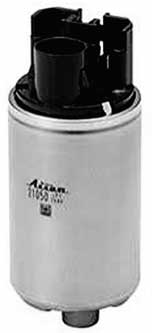
Chemicals firm Celanese Corporation announced that Aisan Industry Kentucky, a subsidiary of Japan-based Aisan Industry Co, has adopted a Celanese polyacetal resin (POM) made from captured CO2 for fuel pump modules produced for a North American automaker.
Celanese says it uses CCU-based chemical building blocks to turn CO2 emissions into POM polymer that offers both reduced product carbon footprint (PCF) as well as a high percentage of circular content.
POM ECO-C solutions are drop-in choices that enable Aisan to offer more sustainable components without sacrificing performance and helps automakers work towards sustainability goals with solutions that are both practical and impactful, it adds.
“Celanese can uniquely turn waste CO2 into a high performance polymer, helping customers meet sustainability goals,” said Todd Elliott, Senior Vice President, Celanese Engineered Materials. “POM ECO-C turns technology into practical solutions while maintaining performance and quality, and without requiring changes to existing designs or production processes.”
Celanese adds it continues to advance materials and technologies that help reduce environmental impact and support progress toward carbon neutrality and more sustainable manufacturing.
Its mass-balance based CCU platform is especially significant in supporting both ends of the integrated Celanese value chain by providing low-carbon feedstocks for ECO-C products across the Acetyl Chain and Engineered Materials businesses for customers seeking more sustainable solutions.
New end-of-life rules to be mandated in the EU for vehicles

The European Parliament has recently given final approval to new EU rules on circularity, which cover the entire life cycle of a vehicle, from design to end-of-life treatment. The agreement reached by Parliament and the Council at the end of 2025 was adopted by 437 votes in favour, 112 against and 20 abstentions.
Under the new rules, all new vehicles must be designed to allow for easy removal of as many parts and components as possible. The plastics used in each new type of vehicle will have to contain at least 15% recycled plastics within six years and 25% within ten years. At least 20% of this recycled plastic must come from materials recovered from ELVs or used parts (so-called closed-loop recycling). Based on feasibility studies, the Commission may introduce targets in the future for other materials such as recycled steel, aluminium, magnesium and critical raw materials.
When selling a used vehicle, businesses (unlike private citizens) will be required to assess whether the vehicle is end-of-life or has a valid technical inspection certificate. To avoid unnecessary burdens on citizens, transactions between private individuals will only require one of these two documents, if the vehicle is declared a total economic loss or if the sale is made exclusively via an online platform.
Three years after the entry into force of these new rules, extended producer responsibility will be introduced, meaning that producers will have to cover the costs of collecting and treating vehicles that have reached the end of their life anywhere in the EU.
In order to address the problem of “missing vehicles” and prevent illegal handling and dismantling, the law prohibits the export of vehicles that have been declared unroadworthy (this measure will apply five years after the entry into force of the Regulation).
After approval by Parliament, the new regulation must be formally approved by the Council before it can enter into force and apply 24 months later.
In 2023, 14.8 million motor vehicles were produced in the EU, while 12.4 million vehicles were registered. There are 285.6 million motor vehicles on the EU’s roads and around 6.5 million vehicles reach the end of their useful life each year.
Subscribe to Get the Latest Updates from IMA Please click here






©2026 Injection Moulding Asia. All rights reserved.