2025 - 2026 Exhibitions
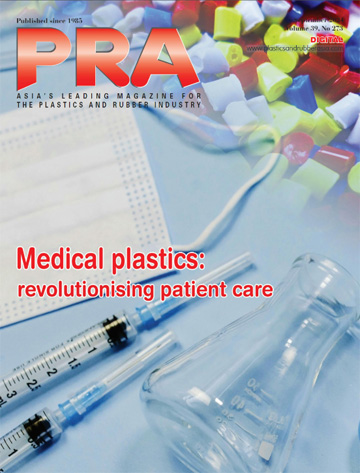
Medical Sector: Healthy propositions for medical devices
With the increasing demand for sustainable, compliant, and future-proof materials, materials suppliers are offering propositions built to support the needs of the medical industry; while TPE and LDPE solutions afford possibilities and a new mould concept accelerates the production of medical devices.
Sustainability: bioplastic pipette for healthcare; recyclable medical packaging
Combining sustainability with pharmaceutical-grade quality and marketability, German manufacturer of dosing aids and primary pharmaceutical packaging elm-plastic has brought to market the first commercially available bioplastic pipette for use in pharmaceuticals and healthcare.
Partners in the development were materials manufacturer Biovox, using its MedEco bioplastic, and the German subsidiary of plastics distributor Ultrapolymers, which is a part of Ravago, provided initial consulting services for material selection and processing up to the start of series production.
MedEco polymers are either 100% based on polylactic acid (PLA) or 95% based on bio-based PE and are approved for use in the medical sector. Compared to existing pipettes made of PE/PP, this step enables a 113% reduction in the CO2 footprint (cradle to gate).
Biovox, which has been developing bioplastics since 2021, adds its MedEco bio-compounds are intended for use in medical and laboratory technology. They are available with a wide range of properties, are compliant with ISO 10993, and can be sterilised using EO/radiation and SCC.
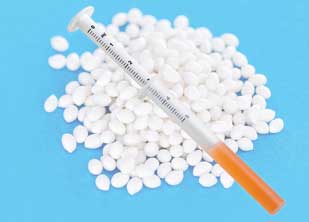
Biovox also adds that MedEco PLA is particularly well-suited to producing dimensionally stable injection-moulded parts with a non-slip surface. Thanks to its high rigidity and strength, applications with low wall thickness can be realised, reducing material consumption. Additionally, its processability at low temperatures enables significant energy savings compared to fossil-based plastics.
In another take on sustainability, Portugal-based copolyester provider Selenis has introduced a recycle-ready medical-grade polyester film engineered for medical packaging.
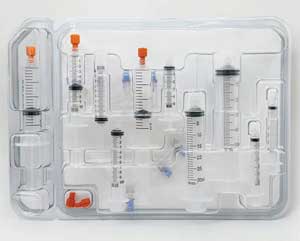
Selcare CE 500, which joins the range of Selcare medical grade, is a low glycol modified polymer resin. The company also adds that by offering this at a price point between standard APET and PETG healthcare grades, its Selcare is a costcompetitive solution.
Further benefits of the resin are its clarity, a neutral colour, and a high-gloss finish, ensuring visual performance and product visibility. Furthermore, it comes with regulatory declarations, including ISO10993, and is free of intentionally added BPA, aligning with the industry’s safety expectations.
The Selcare model also ensures security of supply through manufacturing at multiple sites and full technical support and advice across development and production stages, the company says. Customers can also expect dedicated assistance for MDR (Medical Device Regulation) compliance, along with complete formulation disclosure and notification of change protocols, giving them confidence and control.
Medical-grade TPEs make their mark

Mobility impairment can affect both social well-being and mental health. With the aid of assistive technologies like wheelchairs, individuals can regain movement autonomy, rebuild confidence, reconnect with their communities, and reclaim their quality of life.
Recent developments in materials science have led to the use of lightweight yet high-strength compounds in wheelchair design for improved operability.
German TPE manufacturer KRAIBURG TPE offers medical-grade Thermolast H TPE that features compression set characteristics to allow device elements to maintain their shape and resist pressure, even during prolonged use. The soft-touch, smooth surface of the TPE compounds ensures that wheelchair parts like handles and grips do not cause discomfort or injury, while allowing better control when operating the device, it adds.
The TPE compound also features excellent adhesion to PP and PE, two of the most commonly used plastics in medical device housing and structural parts. This property enables efficient multi-component injection moulding, simplifying production of composite parts such as buttons, grips, and structural seals while maintaining strong mechanical bonding and design flexibility.
With easy colourability, the material is ideal for colour coding wheelchair functions such as brake and adjustment buttons and power switches. This wheelchair material application enhances accessibility and improves accuracy in identifying and using the correct controls.
Other benefits are that it allows for sterilisation via autoclave (121°C) and ethylene oxide (EtO) processes, an essential advantage for use in sterile environments such as hospitals and clinics. Moreover, these sterile material compounds are free from toxic substances, silicone, latex, PVC, phthalates, and animal-derived ingredients. They comply with medical standard ISO 10993-5 and food-contact regulations, including US FDA CFR 21, Regulation (EU) No. 10/2011, and China GB 4806.7-2023
Subscribe to Get the Latest Updates from IMA Please click here





(Browse news archives)




©2025 Injection Moulding Asia. All rights reserved.